Renewable Energy in India – Growth, Challenges & Government Initiatives
Renewable energy refers to energy derived from naturally replenishing sources such as solar, wind, hydro, biomass, and geothermal. Unlike fossil fuels, these resources are inexhaustible and produce little to no greenhouse gas emissions, making them central to climate change mitigation. For India, renewable energy is not just an environmental necessity but also a strategic imperative for energy security, rural development, and green growth. With ambitious targets like achieving 500 GW of non-fossil fuel capacity by 2030 and net-zero emissions by 2070, renewable energy has become the backbone of India’s sustainable development agenda.
Factly
Renewable Energy
- As per IRENA RE Statistics 2025, India ranks 4th globally in Renewable Energy Installed Capacity, 4th in Wind Power, and 3rd in Solar Power capacity.
- Expansion in Renewable Energy Capacity:
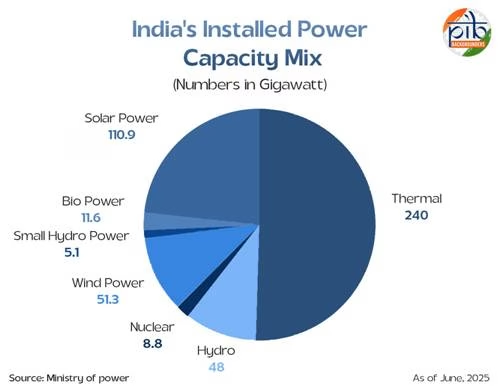
- Installed RE capacity has grown from 76.37 GW in March 2014 to 226.79 GW in June 2025, an increase of nearly 3 times.
- Growth in Generation
- Renewable energy generation rose from 190.96 BU in 2014–15 to 370.65 BU in 2024–25 (April 2024–February 2025), with its share in overall power generation increasing from 17.20% to around 22.20%.
Solar Power(2014–2025)
- Solar capacity has increased more than 39 times, from 2.82 GW in 2014 to 110.9 GW in 2025, including a record 23.83 GW added in 2024–25 alone.
- Manufacturing Boost (2014 to March 2025):
- Solar PV module capacity surged from 2.3 GW to 88 GW, a 38-fold increase.
- Solar PV cell capacity grew from 1.2 GW to 25 GW, a 21-fold increase.
India’s Wind Energy Achievements (2014–2025)
As per National Institute of Wind Energy, the estimated wind potential of the country is 1164 GW at 150 meters above ground level.
- Installed capacity increased from ~21 GW in 2014 to 51.3 GW by June 2025, more than doubling in a decade.
- 4.15 GW added in FY 2024–25 alone.
- Electricity generation by wind energy rose to 78.21 billion Units (BU) between April 2024 and February 2025, contributing 4.69% to total electricity generation.
- Domestic manufacturing strengthened with 31 certified wind turbine models being manufactured by 14 Indian companies and 18 GW annual manufacturing capacity.
Hydropower Expansion(2014–2025)
- Hydro capacity increased from 35.8 GW to 48 GW from FY 2014 to FY 2025.
- Targeting 55 GW by FY 2030, supported by Inter State Transmission System (ISTS) charges waivers and equity assistance for North East projects.
Bio Power(2014–2025)
- Biopower generation capacity has increased from 8.1 GW to 11.6 GW over the last 11 years.
- Compressed Biogas (CBG) generation capacity expanded from a single project with 8 Tonnes per Day (TPD) in 2014 to 150 projects with a cumulative capacity of 1,211 TPD as of March 2025.
- As of 31 March 2025:
- Cumulative installed capacity of Biomass power and cogeneration capacity: 9.82 GW (Bagasse & IPP) and 0.92 GW (Non-Bagasse).
- Cumulative installed capacity of Waste to Energy capacity: 840.21 MWeq (309.34 MW grid-connected, 530.87 MWeq off-grid).
- Under the Biomass Programme, Cumulative installed capacity: 11.583 GW.
Potential of Renewable Energy Sources in India’s Energy Mix
- Solar Energy
- India is one of the world’s most solar-rich countries, with vast areas receiving ample sunlight. India targets to install 500 GW of renewable energy by 2030 and solar energy is set to play a critical role in it
- With continued technological advancements and cost reductions, solar energy can meet a significant portion of India’s electricity needs, especially in rural and off-grid areas.
- Wind Energy
- India has the 4th largest wind energy capacity in the world, with significant potential in coastal and arid regions. By 2030, India aims to have 60 GW of wind energy capacity.
- Wind energy is a reliable, clean source of power, particularly in states like Tamil Nadu, Gujarat, and Maharashtra, which have strong wind potential.
- Hydropower
- With substantial untapped hydropower potential in regions like the Northeast and Himalayan states, hydropower can significantly contribute to India’s renewable energy capacity.
- While large-scale hydropower projects have faced environmental and displacement concerns, small and micro hydropower projects offer a sustainable solution.
- Biomass Energy
- India has a large agricultural base, and biomass energy (derived from agricultural residues, animal waste, and forestry) holds significant potential for electricity generation and biofuels.
- It can provide decentralized power solutions for rural areas, create jobs, and reduce agricultural waste.
- Offshore and Ocean Energy
- India’s long coastline offers the potential for offshore wind and tidal energy, which could complement onshore wind and solar capacities.
- Research and development in ocean energy technologies can diversify India’s renewable energy sources further.
Key Challenges in Scaling Up Renewable Energy Infrastructure
- Grid Integration and Storage
- Renewable energy sources like solar and wind are intermittent, meaning they do not provide consistent power throughout the day.
- The lack of adequate energy storage solutions (e.g., batteries) and grid infrastructure to integrate these fluctuating sources into the existing grid remains a significant challenge.
- Land Acquisition and Site Selection
- Large-scale renewable energy projects, especially solar and wind farms, require vast amounts of land, often leading to conflicts with agricultural use and environmental concerns.
- Identifying and acquiring land for renewable energy projects is a lengthy process that involves bureaucratic delays and local resistance.
- High Initial Investment Costs
- Although the cost of renewable energy technologies, particularly solar and wind, has dropped significantly, the initial capital investment required for setting up renewable energy infrastructure remains high.
- Financing renewable projects, especially for smaller players and developers, is still a challenge due to perceived risks and lack of long-term financing options.
- Lack of Skilled Workforce
- Scaling up the renewable energy sector requires a skilled workforce for installation, maintenance, and operation.
- The lack of adequate training programs for workers in renewable energy technologies can hinder the growth of the sector and delay project timelines.
- Regulatory and Policy Challenges
- Despite government support for renewable energy, inconsistent policies, regulatory uncertainty, and delays in permitting can slow the progress of projects.
- The lack of clear and enforceable long-term policies can undermine investor confidence in renewable energy projects.
- Environmental and Social Issues
- Large-scale renewable projects like hydropower or biomass face environmental concerns, including deforestation, wildlife habitat disruption, and water resource management.
- There is also resistance from local communities, particularly in the case of hydropower projects, due to displacement and ecological impacts.
Strategies to Overcome Challenges and Meet Renewable Energy Targets
- Developing Grid Infrastructure and Energy Storage Solutions
- Upgrading the national grid to handle decentralized renewable energy and improving grid flexibility is essential for integrating intermittent energy sources.
- Investment in energy storage technologies like large-scale batteries and pumped hydro storage can help address issues of supply intermittency and enhance grid stability.
- Land Use Policies and Efficient Site Selection
- The government should create a streamlined and transparent land acquisition process for renewable projects.
- Focus should be placed on using non-agricultural land, barren or wasteland, and rooftops for solar installations to avoid conflicts with food production.
- Financing Mechanisms and Incentives
- The government should introduce long-term financing solutions such as green bonds, low-interest loans, and tax incentives to attract investment in renewable energy projects.
- Public-private partnerships (PPPs) and collaboration with international investors can help ease the financial burden on developers.
- Skilling and Capacity Building
- Establishing vocational training programs and academic courses in renewable energy technologies will ensure a skilled workforce is available to support the industry’s growth.
- Collaboration with international institutions can facilitate knowledge exchange and technology transfer.
- Policy Consistency and Regulatory Frameworks
- A stable and transparent policy environment is crucial to ensure continued growth in the renewable energy sector.
- Government support in terms of tax breaks, subsidies, and long-term policy certainty can encourage private sector investment and accelerate infrastructure development.
- Promoting Distributed and Decentralized Energy Systems
- Promoting smaller, decentralized renewable energy systems, such as rooftop solar panels, small-scale wind turbines, and local biomass plants, can reduce the burden on large centralized projects.
- Decentralized energy systems are particularly useful in rural and remote areas, enhancing energy access and improving energy security.
Government Initiatives to Promote Renewable Energy
Ambitious Targets and National Plans
- Panchamrit Targets: Announced at COP26, these set the overarching direction:
- Reach 500 GW of non-fossil energy capacity by 2030.
- 50% of energy from renewables by 2030.
- Reduction in emission intensity of the economy by 45% by 2030 (from 2005 level).
- National Hydrogen Mission: Aims to make India a global hub for production and export of Green Hydrogen and its derivatives.
Major Policy and Regulatory Initiatives
- National Electricity Plan (NEP): A comprehensive plan that prioritizes renewable energy integration into the national grid.
- Renewable Purchase Obligation (RPO): Mandates that distribution companies (Discoms), large industries, and other bulk consumers must source a certain percentage of their power from renewable sources.
- Declaration of trajectory for Renewable Purchase Obligation (RPO) up to the year 2030
- Waiver of Inter State Transmission System (ISTS) charges for inter-State sale of solar and wind power for projects to be commissioned by 30th June 2025 and graded ISTS charges thereafter
- Green Energy Corridor: This project focuses on developing and integrating renewable energy sources, particularly wind and solar, into the existing electricity grid infrastructure.
- Laying of new transmission lines and creating new sub-station capacity under the Green Energy Corridor Scheme for evacuation of renewable power
- Launch of new schemes and programs, including Development of Solar Parks and Ultra Mega Solar Power Projects Scheme, Pradhan Mantri Kisan Urja Suraksha evam Utthaan Mahabhiyan Yojana (PM-KUSUM), Grid Connected Solar Rooftop Programme, Production Linked Incentive Scheme under ‘National Programme on High Efficiency Solar PV Modules, National Bioenergy Programme, Renewable Energy Research and Technology Development (RE-RTD) Programme, Schemes for incentives on electrolyser manufacturing and Green Hydrogen production under the National Green Hydrogen Mission.
- Setting up of Project Development Cell for attracting and facilitating investments
- Notification of Promoting Renewable Energy through Green Energy Open Access Rules 2022,
- Notification of Electricity Amendment Rules 2022 with provision of Uniform Renewable Energy Tariff for Central Pool.
- Launch of Green Term Ahead Market to facilitate sale of renewable energy power through exchanges.
- Bioenergy
- Establishment of ‘waste to wealth’ plants under the new GOBARdhan (Galvanizing Organic Bio-Agro Resources Dhan) scheme
- In the 2023-24 Union Budget, a mandatory requirement was issued by the government to utilise a minimum of 5% compressed biogas (CBG) in their fuel mix.
Financial Incentives and Support
- Viability Gap Funding (VGF): Provided by the government to make otherwise financially unviable projects (like offshore wind, solar-wind hybrid) attractive for private developers.
- Scheme for Viability Gap Funding (VGF) for development of Battery Energy Storage Systems (BESS): The scheme envisages development of 4,000 MWh of BESS projects by 2030-31, with a financial support of up to 40% of the capital cost as budgetary support in the form of Viability Gap Funding (VGF).
- Permitting Foreign Direct Investment (FDI) up to 100 percent under the automatic route for renewable energy projects
International Cooperation and Investment
- International Solar Alliance (ISA): An India-initiated global alliance of 120+ sunshine-rich countries to collaborate on solar technology, funding, and research. It has improved technology transfer and reduced costs.
- Multilateral Funding: Tapping into funds from World Bank, Asian Development Bank (ADB), and Green Climate Fund for renewable projects.
International Cooperation and Investment
- International Solar Alliance (ISA): An India-initiated global alliance of 120+ sunshine-rich countries to collaborate on solar technology, funding, and research. It has improved technology transfer and reduced costs.
- Multilateral Funding: Tapping into funds from World Bank, Asian Development Bank (ADB), and Green Climate Fund for renewable projects.
Flagship Schemes & Programmes
1. PM-Surya Ghar: Muft Bijli Yojana
Launched in February 2024, this scheme aims to provide 1 crore households with free electricity through rooftop solar systems. With an outlay of ₹75,021 crore, it targets an addition of 30 GW in solar capacity through rooftop solar in residential sector, potentially generating 1 lakh crore units over 25 years and reducing 720 MMT of CO₂ emissions.
2. PM-KUSUM Scheme
Launched in March 2019, the objective of the scheme is to enhance farmers’ income by providing energy and water security and de-dieselisation of the farm sector. The scheme provides financial support to the farmers for installation of standalone solar pumps and solarization of existing grid-connected agriculture pumps, and installing solar power plants on their barren/fallow agricultural land. The scheme targets the addition of 34.8 GW of solar capacity across the country, with a total financial outlay of ₹34,422 crore.
Three major components:
- A: 10,000 MW of Decentralized Ground Mounted Grid Connected Solar Power Plants.
- B: Installation of 15 lakh standalone Solar Powered Agriculture Pumps.
- C: Solarisation of 35 Lakh Grid-connected Agriculture Pumps including through Feeder Level Solarisation.
Now all components are covered under the Agriculture Infrastructure Fund (AIF) for easy financing.
3. Solar Parks Scheme
This scheme facilitates large-scale grid-connected solar power projects with required infrastructure like land, power evacuation facilities, road connectivity, water facility etc. along with all statutory clearances.
4. PLI Scheme for High Efficiency Solar PV Modules
The PLI Scheme for High Efficiency Solar PV Modules aims to boost domestic manufacturing. It also reduces import dependence. The scheme has an outlay of ₹24,000 crore.
5. PM JANMAN: Empowering PVTG Communities through Solar Electrification
The Pradhan Mantri Janjati Adivasi Nyaya Maha Abhiyan (PM JANMAN) was launched to address the development needs of Particularly Vulnerable Tribal Groups (PVTGs) through 11 critical interventions across 9 Ministries. A key initiative under this mission and Dharti Aaba Janjatiya Gram Utkarsh Abhiyan (DA JGUA) is the New Solar Power Scheme, with an outlay of ₹515 crore, aimed at electrifying one lakh un-electrified households in Tribal and PVTG habitations across 18 states, promoting inclusive growth and sustainable energy access in remote tribal areas.
Renewable energy has the potential to transform India’s energy landscape by ensuring sustainability, reducing import dependency, generating rural employment, and mitigating climate change. However, challenges such as grid integration, high capital costs, land acquisition, and policy consistency remain barriers to full-scale deployment. A balanced strategy involving technological innovation, robust infrastructure, skill development, transparent regulations, and strong public-private partnerships is essential. With visionary policy push through missions like PM-KUSUM, the Green Hydrogen Mission, and international platforms like ISA, India is well-positioned to lead the global renewable energy revolution and achieve its Panchamrit targets and Net Zero by 2070.
GS-3 Mains Question
Q1. Renewable energy is not merely an environmental necessity but a strategic imperative for India. Discuss. (10 marks, 150 words)
Q2. Discuss the key challenges in scaling up renewable energy infrastructure in India and evaluate the government’s strategies to overcome them. (15 marks, 250 words)
✍️ Curated by InclusiveIAS Editorial Team
At InclusiveIAS, our editorial team is led by experts who have successfully cleared multiple stages of the UPSC Civil Services Examination, including Mains and Interview. With deep insights into the demands of the exam, we focus on crafting content that is accurate, exam-relevant, and easy to grasp.
Whether it’s Polity, Current Affairs, GS papers, or Optional subjects, our notes are designed to:
Break down complex topics into simple, structured points
Align strictly with the UPSC syllabus and PYQ trends
Save your time by offering crisp yet comprehensive coverage
Help you score more with smart presentation, keywords, and examples
🟢 Every article, note, and test is not just written—but carefully edited to ensure it helps you study faster, revise better, and write answers like a topper.