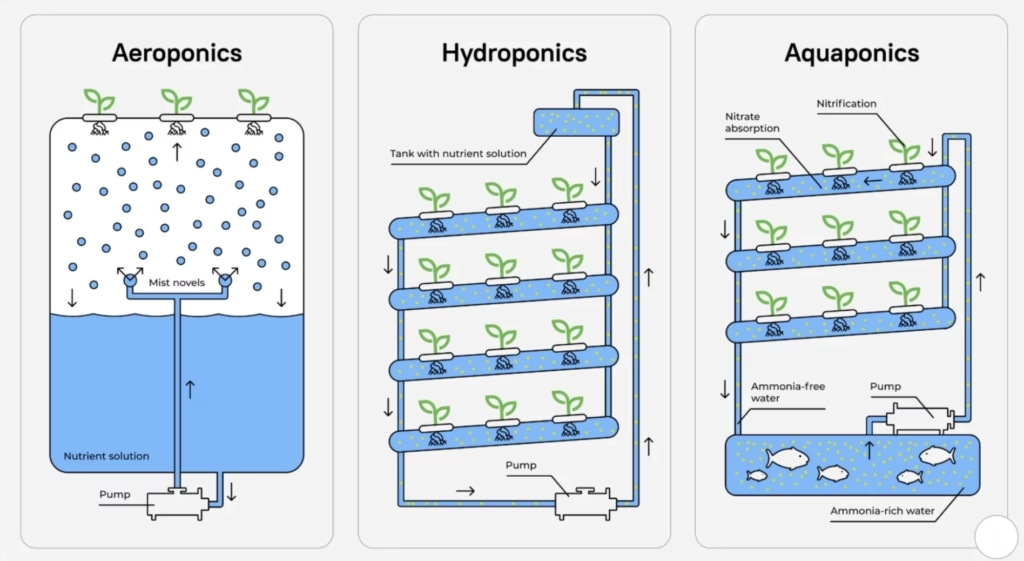
Vertical farming systems like aeroponics and hydroponics come under the broad umbrella ambit of ‘protected cultivation’, where one can control and regulate multiple variables like water, soil, temperature, humidity, and so on.
Traditional farming involves planting crops in soil on open fields with natural sunlight and irrigation. However, vertical farming takes place inside, grows crops in stacked layers, and uses artificial growing systems such as hydroponics, aquaponics, or other methods of soilless agriculture.
While sometimes soil is used, increasingly vertical farms use hydroponic or aeroponic systems, where water (for hydroponics) or water vapour (for aeroponics) infused with nutrients is circulated directly around the roots of the plant.
Additional Information
In 1915,Gilbert Ellis Bailey coined the term vertical farmingand he went on to write a namesake book.
The modern concept was first proposed in 1999 by professor Dickson Despommier. His conceptcentered on the idea that urban areas should grow their own food which can save time and resourcesrequired for transportation.
The three most common indoor vertical farming systems are aquaponics, aeroponics, and hydroponics, all of which rely on soilless cultivation techniques to supply plants with essential nutrients.
Hydroponics – Plants are grown in nutrient-rich water instead of soil.
Aeroponics – Roots are suspended in air and sprayed with a nutrient solution.
Aquaponics – Combines aquaculture (fish farming) with hydroponics in a symbiotic system.
Benefits
Uses up to 90–95% less water than conventional farming (due to hydroponics/aeroponics).
It allows growers to grow regional or seasonal crops indoors year-round.
It uses much less land.For some crops, 10 to 20 times the yield can be obtained per acre in vertical farming compared to open-field crops.
Vertical farms are in enclosed structures, so not subject to extreme or inclement weather.
It has the potential to create new jobs, skill sets, and economic opportunities for the agriculture students.
As most of the crops are grown “without the use of pesticides”, it leads to “a positive contribution towards better public health as well over time.
Challenges
High Initial Cost
Requires heavy investment in infrastructure, automation, and energy systems
Energy Consumption
High electricity usage for lighting and climate control
Limited Crop Diversity
Primarily suitable for leafy greens, herbs, and microgreens; less viable for cereals, pulses, and root vegetables
Technical Expertise
Requires skilled personnel for managing technology, plant health, and system maintenance
Scalability and Profitability
Difficult for small farmers to afford; profitability depends on market demand and economies of scale
Vertical farming offers a glimpse into the future of agriculture, especially in an era of growing urbanization, climate instability, and resource constraints. While it cannot replace traditional farming, it can complement it by ensuring food availability in cities, reducing agricultural footprints, and promoting circular resource use. With policy support, R&D, and private sector participation, vertical farming can be a crucial tool in ensuring sustainable food systems for India.
FAQs
1. What is vertical farming?
Vertical farming is the practice of growing crops in vertically stacked layers using controlled environment agriculture, often without soil, using hydroponics or aeroponics.
2. Is vertical farming suitable for India?
Yes, especially in urban areas with limited land, water scarcity, and increasing food demand. It can enhance food security and reduce logistics costs.
3. What crops can be grown in vertical farms?
Mainly leafy vegetables, herbs (like basil and mint), strawberries, microgreens, and some fruits.
At InclusiveIAS, our editorial team is led by experts who have successfully cleared multiple stages of the UPSC Civil Services Examination, including Mains and Interview. With deep insights into the demands of the exam, we focus on crafting content that is accurate, exam-relevant, and easy to grasp.
Whether it’s Polity, Current Affairs, GS papers, or Optional subjects, our notes are designed to:
Break down complex topics into simple, structured points
Align strictly with the UPSC syllabus and PYQ trends
Save your time by offering crisp yet comprehensive coverage
Help you score more with smart presentation, keywords, and examples
🟢 Every article, note, and test is not just written—but carefully edited to ensure it helps you study faster, revise better, and write answers like a topper.