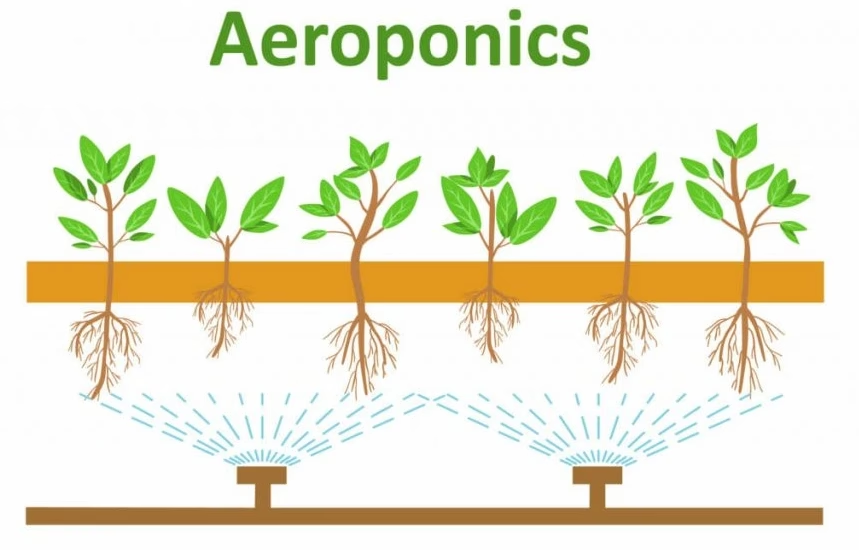
Aeroponics is the practice of growing plants in an air or mist environment without the use of any substrate. That is, the plant roots are suspended in the air and are misted or sprayed periodically with a nutrient solution or aerosol of nutrient solution.
Advantages
Greater control of nutrient application enables one to consistently tune crop quality.
Water efficient: Uses significantly less water — ideal for water-scarce regions.
Space saving vertical farming: Allows dense, stacked plantation — perfect for urban/indoor farms.
No soil-borne diseases: Absence of growing medium reduces pests and infections.
High yield & quality: Consistent supply of nutrients enhances output and taste.
In aeroponics, the roots have greater access to oxygen, which results in healthier plants, significantly faster crop growth rates and increased yields.
Systems are sensitive to power failures and misting disruptions.
Requires technical expertise
Not ideal for low-resource or traditional farmers.
Limited crop suitability
Not all crops are suitable for this method.
Aeroponics represents the future of precision agriculture, with its high efficiency, space optimization, and minimal ecological footprint. While cost and complexity remain barriers, aeroponics holds tremendous potential in addressing urban food security, climate change, and resource conservation in modern agriculture.
FAQs
1. What is aeroponics?
Aeroponics is a method of growing plants without soil or water-based growing media. Instead, the roots are suspended in air and misted with a nutrient-rich solution at regular intervals.
At InclusiveIAS, our editorial team is led by experts who have successfully cleared multiple stages of the UPSC Civil Services Examination, including Mains and Interview. With deep insights into the demands of the exam, we focus on crafting content that is accurate, exam-relevant, and easy to grasp.
Whether it’s Polity, Current Affairs, GS papers, or Optional subjects, our notes are designed to:
Break down complex topics into simple, structured points
Align strictly with the UPSC syllabus and PYQ trends
Save your time by offering crisp yet comprehensive coverage
Help you score more with smart presentation, keywords, and examples
🟢 Every article, note, and test is not just written—but carefully edited to ensure it helps you study faster, revise better, and write answers like a topper.