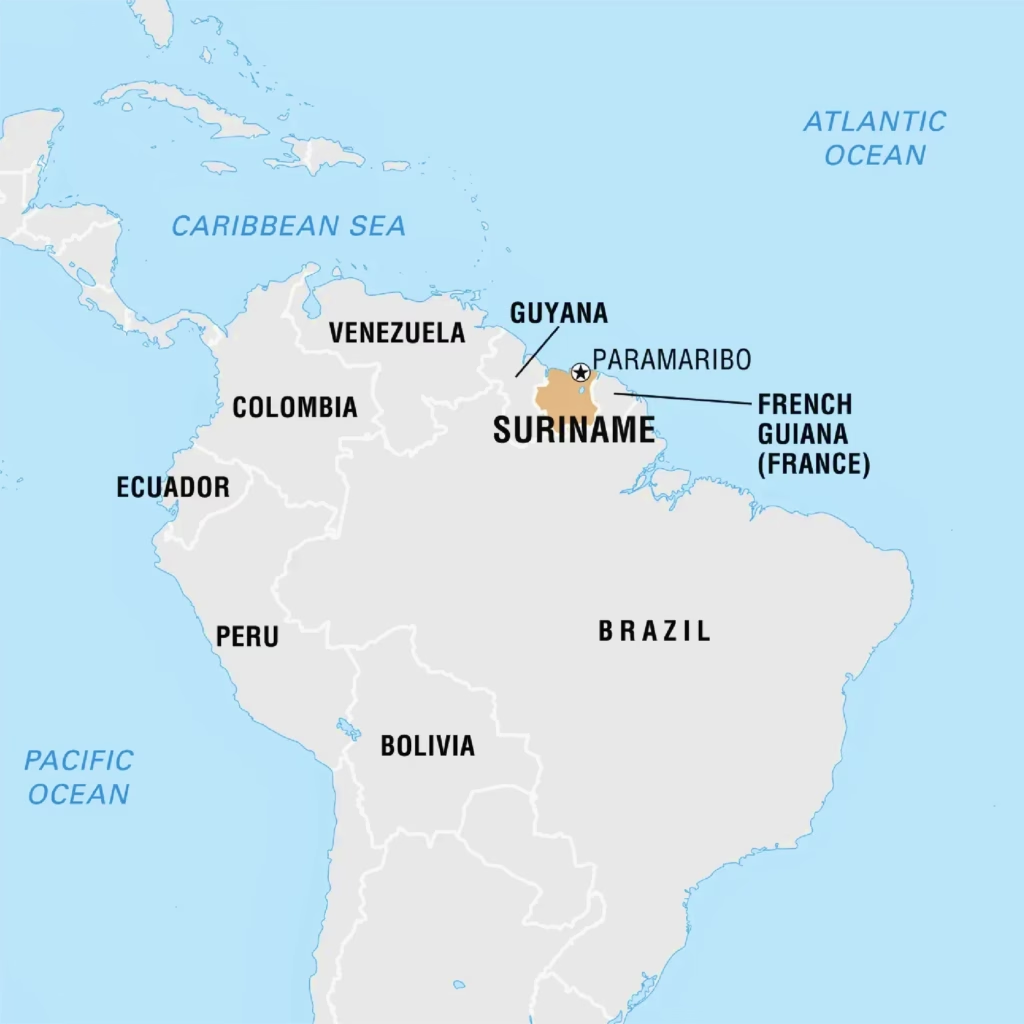
Suriname’s government has pledged to permanently protect 90% of its tropical forests, one of the most ambitious climate and biodiversity commitments by any Amazonian nation. The announcement was made during Climate Week in New York City by Foreign Minister Melvin W.J. Bouva on behalf of President Jennifer Geerlings-Simons.
Global Climate Leadership
- Suriname has set a new benchmark in global climate action by pledging to protect 90% of its forests, going far beyond the UN-backed “30×30” target of conserving 30% of land and seas by 2030. This positions Suriname as a global leader in conservation.
Carbon Sink Contribution
- With 93% of its land already under forest cover, Suriname is one of only three countries in the world that absorbs more carbon dioxide than it emits. By safeguarding its forests, it reinforces its role as a vital carbon sink, crucial for mitigating climate change.
Biodiversity Protection
- Suriname’s forests are home to jaguars, giant river otters, tapirs, more than 700 bird species, and the rare blue poison dart frog. Protecting 90% of its forests secures critical habitats, ensures ecological stability, and preserves unique biodiversity.
Indigenous and Local Community Rights
- The framework under discussion includes potential recognition of Indigenous and Maroon peoples’ land rights. This is significant because these communities are both highly dependent on forests and the best custodians of sustainable conservation.
Socio-Economic Benefits
- The $20 million support from international donors will create local jobs linked to forest conservation, provide opportunities in eco-tourism, and strengthen sustainable livelihoods, reducing dependence on destructive resource extraction.
Global Climate Stabilization
- Conserving such vast rainforests not only benefits Suriname but also contributes to the stability of the Amazon basin and the global climate system, making it a step forward in combating deforestation-driven climate change.
Moral Responsibility & Inspiration
- The pledge demonstrates moral leadership by a small Amazonian nation, showing that even developing countries can commit strongly to climate action. It sets an example for larger and wealthier countries to follow.
FAQs
Q1. Why is Suriname’s pledge to protect 90% of forests significant?
Suriname’s pledge goes far beyond the global “30×30” target, positioning it as a global leader in conservation. It strengthens its role as a carbon sink, secures biodiversity, and sets a moral example for other nations.
Q2. How much of Suriname is already forested?
Currently, about 93% of Suriname is covered by forests, making it one of the most heavily forested countries in the world.
Q3. What biodiversity does Suriname’s rainforest support?
Suriname’s forests are home to jaguars, giant river otters, tapirs, 700+ bird species, and the rare blue poison dart frog.
At InclusiveIAS, our editorial team is led by experts who have successfully cleared multiple stages of the UPSC Civil Services Examination, including Mains and Interview. With deep insights into the demands of the exam, we focus on crafting content that is accurate, exam-relevant, and easy to grasp.
Whether it’s Polity, Current Affairs, GS papers, or Optional subjects, our notes are designed to:
Break down complex topics into simple, structured points
Align strictly with the UPSC syllabus and PYQ trends
Save your time by offering crisp yet comprehensive coverage
Help you score more with smart presentation, keywords, and examples
🟢 Every article, note, and test is not just written—but carefully edited to ensure it helps you study faster, revise better, and write answers like a topper.