


Table of Contents
ToggleCoral reefs are often called the “rainforests of the sea” because they support extremely rich marine biodiversity despite occupying a very small portion of the ocean floor. They provide habitat, food, breeding grounds, coastal protection and livelihood support to millions of people.
In India, coral reefs are mainly found in the Gulf of Mannar, Gulf of Kachchh, Lakshadweep Islands and Andaman and Nicobar Islands.

Coral Bleaching
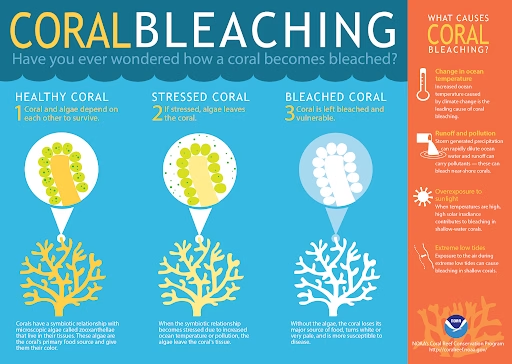
When corals are stressed by changes in conditions such as temperature, light, or nutrients, they expel the symbiotic algae living in their tissues, causing them to turn completely white.
When a coral bleaches, it is not dead. Corals can survive a bleaching event, but they are under more stress and are subject to mortality.
Causes of Coral Bleaching
Conclusion
Coral reefs are among the most beautiful, productive and vulnerable marine ecosystems. They support biodiversity, fisheries, tourism, coastal protection and climate resilience. However, ocean warming, bleaching, pollution, destructive fishing and unplanned coastal development are pushing them towards degradation. Coral conservation must combine global climate action, local pollution control, sustainable fisheries, responsible tourism, scientific restoration and community participation. The guiding principle should be: “Protect corals to protect coasts, oceans and coastal communities.”
Q1. Coral reefs are called the rainforests of the sea. Explain their ecological and economic significance.
(150 words, 10 marks)
Q2. What is coral bleaching? Discuss its major causes and impacts on marine ecosystems.
(150 words, 10 marks)
At InclusiveIAS, our editorial team is led by experts who have successfully cleared multiple stages of the UPSC Civil Services Examination, including Mains and Interview. With deep insights into the demands of the exam, we focus on crafting content that is accurate, exam-relevant, and easy to grasp.
Whether it’s Polity, Current Affairs, GS papers, or Optional subjects, our notes are designed to:
Break down complex topics into simple, structured points
Align strictly with the UPSC syllabus and PYQ trends
Save your time by offering crisp yet comprehensive coverage
Help you score more with smart presentation, keywords, and examples
🟢 Every article, note, and test is not just written—but carefully edited to ensure it helps you study faster, revise better, and write answers like a topper.

Empowering UPSC aspirants with structured preparation, exam-focused notes, free tests, and expert guidance — trusted by thousands of serious aspirants.
