✅ Answer Writing Program solutions will be uploaded regularly in the InclusiveIAS App. Download the app now: Download Now✅ Answer Writing Program solutions will be uploaded regularly in the InclusiveIAS App. Download the app now: Download Now
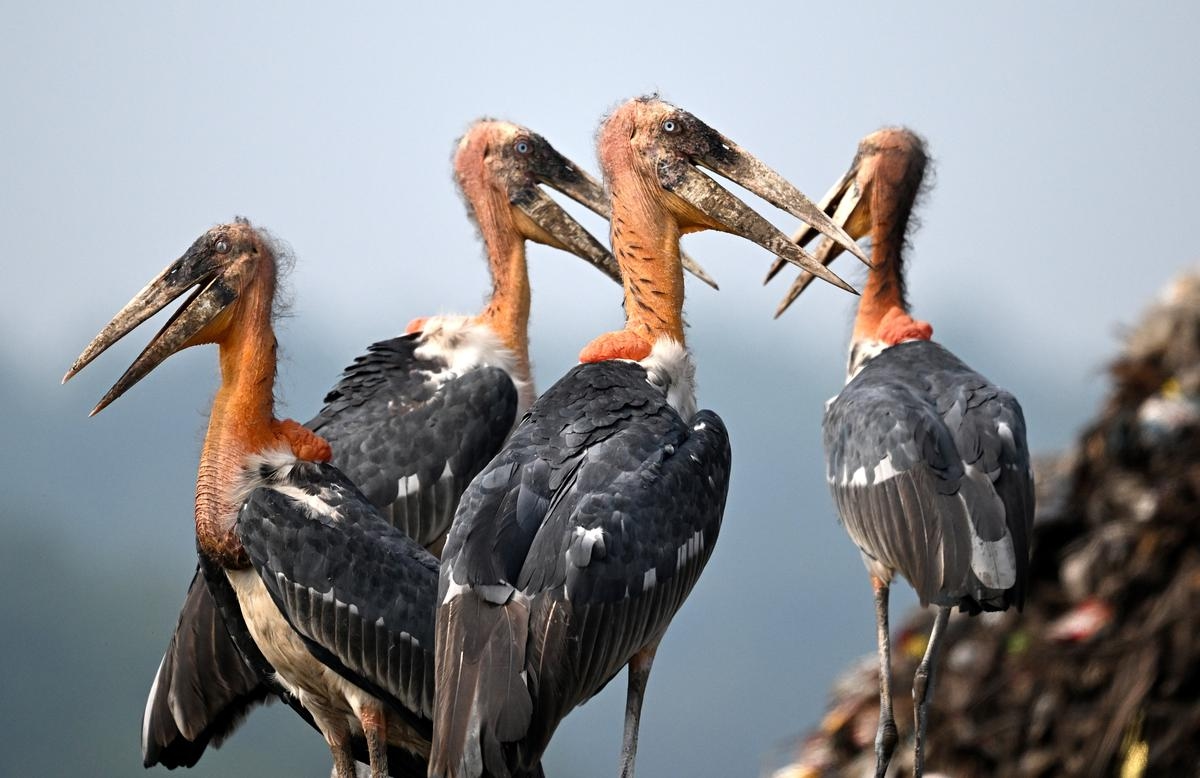
The Greater Adjutant Stork (Leptoptilos dubius) is a large wetland and scavenging bird found mainly in parts of South and Southeast Asia.
📋Characteristics
Appearance: Massive wedge-shaped bill, bare head, and a distinctive inflatable neck pouch (gular pouch).
Usually seen singly or in small groups while foraging in shallow water.
Breeding: Breeds during winter in colonies, often alongside other large waterbirds. Disperses widely after the breeding season.
Diet: Primarily a scavenger, feeding on carrion, fish, frogs, insects, reptiles, birds, rodents and other small animals.
It is often found in the company of kites and vultures and will sometimes sit hunched still for long durations.
Thermoregulation: They may also hold their wings outstretched, presumably to control their temperature.
They soar on thermals using their large outstretched wings.
🌍Distribution & Habitat
Habitat: Forest, Grassland, Wetlands (inland), Artificial/Terrestrial. It inhabits wetlands, shallow lakes, drying lake beds, and freshwater flooded forests.
Distribution: The global breeding population is confined to three major breeding sites:
Assam (India)
Bihar (India)
Cambodia
🛡️Conservation Status
IUCN: Near Threatened
Indian Wildlife (Protection) Act, 1972: Schedule IV
👩🌾Hargila Army
The Hargila Army is a grassroots women's conservation movement in Assam, India, dedicated to saving the endangered Greater Adjutant Stork (locally called Hargila, meaning "bone swallower").
It was founded by wildlife biologist Dr. Purnima Devi Barman.
Practice Environment Tests
MCQ-based tests on Environment & Ecology — free on website & app