


Economy
National Multidimensional Poverty Index: A Progress Review (2023)
The National Multidimensional Poverty Index (MPI): A Progress Review 2023, published by NITI Aayog, is the second edition of India’s national MPI. Based on data from the 5th round of the National Family Health Survey (NFHS-5 conducted in 2019-21), the report tracks India's progress in reducing multidimensional poverty against the baseline report (NFHS-4 conducted in 2015-16).
Key Features
- Coverage: Provides multidimensional poverty estimates for all 36 States and Union Territories and 707 administrative districts across 12 indicators.
- Data Source: Based on the National Family Health Survey (NFHS-5), conducted during 2019–21.
- Comparison: This edition presents the changes in multidimensional poverty between the survey periods of NFHS-4 (2015-16) and NFHS-5 (2019-21).
Key Findings
- MPI Value: India’s National MPI value declined by nearly half between 2015–16 and 2019–21.
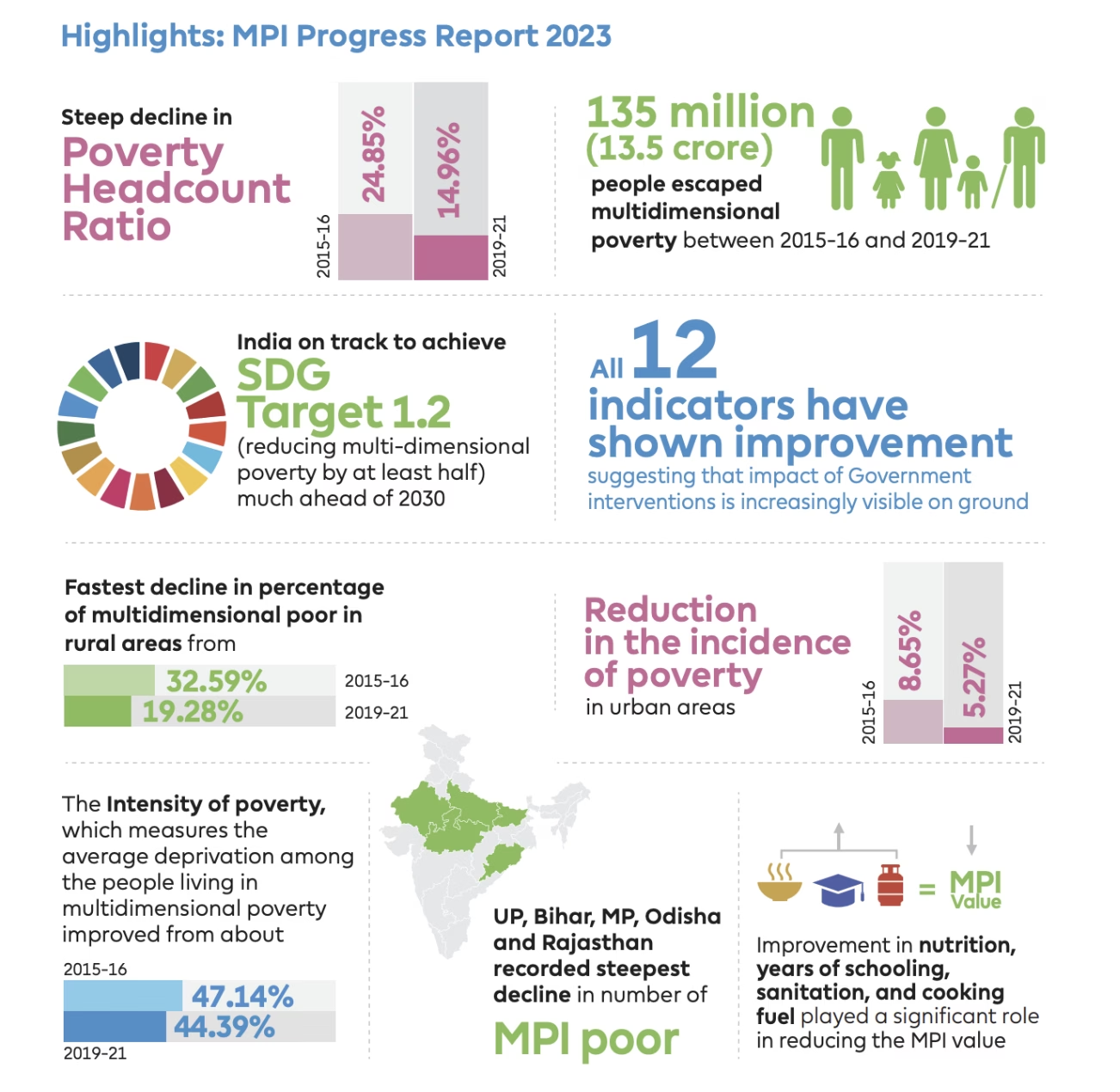
- Reduction in Poverty: The proportion of India’s population living in multidimensional poverty declined by 9.89 percentage points, from 24.85% in 2015–16 to 14.96% in 2019–21.
- People Escaping Poverty: This reduction of 9.89 percentage points in multidimensional poverty indicates that, at the level of projected population in 2021, about 135.5 million persons have escaped poverty between 2015-16 and 2019-21.
- Rural–Urban Disparities: In 2019–21, the proportion of multidimensionally poor people was higher in rural areas (19.28%) than in urban areas (5.27%).
- Rural–Urban Poverty: Multidimensional poverty declined in both rural and urban areas, with rural areas recording a larger absolute reduction in the MPI value.
- Rural Poverty: The proportion of multidimensionally poor people in rural areas declined from 32.59% to 19.28%.
- Urban Poverty: The proportion of multidimensionally poor people in urban areas declined from 8.65% to 5.27%.
- SDG Target 1.2: The findings indicated progress towards achieving SDG Target 1.2 that aims to reduce “at least by half the proportion of men, women and children of all ages living in poverty in all its dimensions according to national definitions”.
- Intensity of Poverty: The average weighted deprivation experienced by multidimensionally poor people declined from 47.14% to 44.39%.
- State-Wise Findings
- Bihar, the state with the highest MPI value in NFHS-4 (2015-16), saw the fastest reduction in MPI value in absolute terms with the proportion of multidimensional poor reducing from 51.89% to 33.76% in 2019-21. The next fastest reduction in the MPI value was seen in Madhya Pradesh and Uttar Pradesh.
- Largest Number of People Escaping Poverty: Uttar Pradesh recorded the highest number of people escaping multidimensional poverty (3.43 crore), followed by Bihar (2.25 crore) and Madhya Pradesh (1.36 crore).
Indicator-Wise Deprivation: National MPI (2023)
According to NITI Aayog’s National Multidimensional Poverty Index: A Progress Review (2023), deprivation declined across all 12 indicators between 2015–16 (NFHS-4) and 2019–21 (NFHS-5).
- Largest Reduction: Sanitation recorded the largest decline in deprivation (21.75 percentage points), followed by Cooking Fuel (14.57 percentage points).
- Major Contributors: Improvements in Sanitation, Cooking Fuel, Nutrition and Years of Schooling contributed significantly to the reduction in multidimensional poverty.
- Persistent Deprivations: Cooking Fuel (43.90%) and Housing (41.37%) recorded the highest deprivation levels in 2019–21, followed by Nutrition (31.52%) and Sanitation (30.13%).
- Lowest Deprivation: Child and Adolescent Mortality recorded the lowest deprivation (2.06%) in 2019–21.