UPDATES

CAR T-Cell Therapy: Meaning, Procedure, Benefits, Risks, and Why T-Cells Are Used

  • Home
  • CAR T-Cell Therapy: Meaning, Procedure, Benefits, Risks, and Why T-Cells Are Used
Shape Image One

CAR T-Cell Therapy

  • CAR-T cell therapy, or chimeric antigen receptor T-cell therapy, is a form of immunotherapy that utilizes the patient’s own immune cells to combat cancer.
  • It represents a form of personalized medicine, as the therapy is tailored to each individual’s specific cancer.
  • CAR-T cell therapies are also called “living drugs” because they use a patient’s own living T-cells, genetically engineered to target and destroy cancer cells. These cells actively seek out, proliferate, and persist in the body, providing a dynamic and personalised defence against cancer, unlike traditional static drugs.

Procedure:

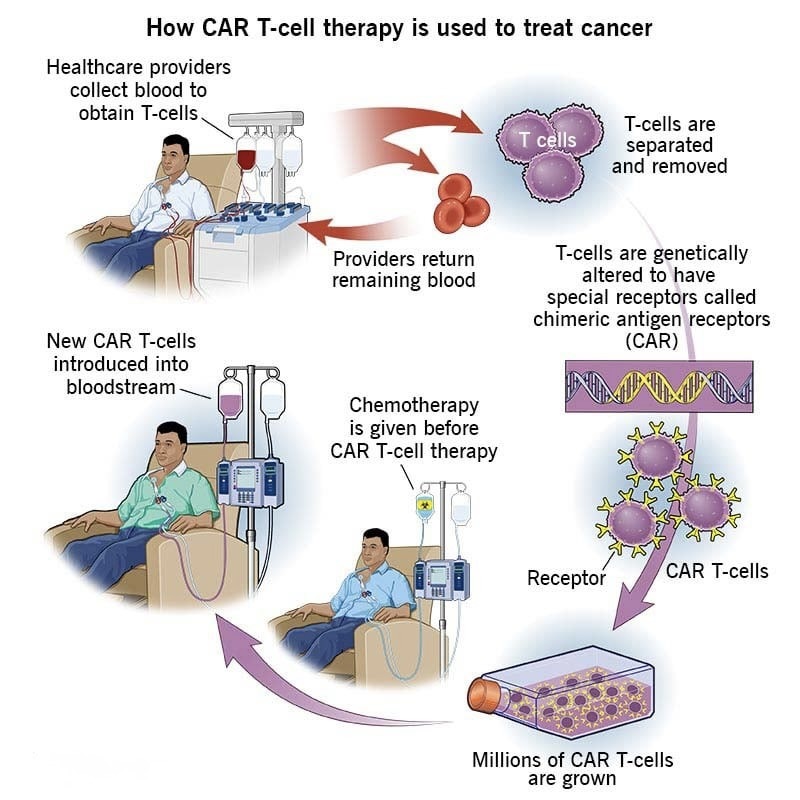
  • The CAR-T cell therapy starts by collecting a patient’s T-cells through a process called apheresis, which separates these cells from the blood. These T-cells are then sent to a lab where scientists modify them to add special receptors called chimeric antigen receptors (CARs).
  • These receptors help the T-cells find and kill cancer cells. This modification process takes a few weeks. Afterward, the modified T-cells are grown in large numbers before the modified T-cells are given back to the patient’s bloodstream.

Why are T-Cells used?

  • T-cells are mainly used in CAR-T cell therapy due to their crucial role in the immune system’s response to pathogens and cancers. These cells can be genetically modified to express chimeric antigen receptors (CARs), which are engineered to specifically identify and attach to antigens on the surface of cancer cells. Upon binding, these altered T-cells can effectively eliminate the cancer cells. 
  • While other immune cells like B cells and natural killer cells also contribute to immune defense, they lack the same level of adaptability and memory that T-cells possess, making them less suitable for the sustained and targeted action needed in CAR-T cell therapy.

Benefits

  • Targeted Precision: CAR-T cell therapy is engineered to recognize and target specific antigens found on cancer cells. This targeted approach enables the therapy to focus on destroying cancer cells while leaving healthy, normal cells unharmed. The precision of this treatment minimizes collateral damage and lowers the likelihood of side effects, in contrast to conventional treatments such as chemotherapy, which can harm both cancerous and healthy cells.
  • Personalised Treatment: The therapy is highly personalised.T-cells are collected from the patient’s own blood, modified in the lab to express specific receptors that target cancer cells, and then reintroduced into the patient. This personalized method ensures the treatment is tailored to the distinct features of the patient’s cancer, thereby improving its effectiveness.
  • Long-Lasting Effects:In certain cases, CAR-T cells have shown the ability to remain in the patient’s body for an extended period, offering potential long-term protection against cancer recurrence. These modified T-cells can continue to identify and attack cancer cells long after the initial infusion.
  • Reduced Hospitalisation and Supportive Care Costs: The targeted nature and effectiveness of CAR-T cell therapy may result in fewer hospitalizations and a reduced need for supportive care. It lowers the frequency and length of hospital stays, as well as the need for ongoing treatments, leading to potential cost savings.
  • Advances in Treatment Options: CAR-T cell therapy marks a major breakthrough in cancer treatment, providing an alternative to traditional therapies. It has paved the way for new research and development in immunotherapy, advancing cancer treatment strategies and broadening the options available to patients.

Potential Risks

  • Severe Side Effects: CAR-T therapy can cause serious side effects, including cytokine release syndrome (a widespread activation of the immune system and collateral damage to the body’s normal cells) and neurological symptoms (severe confusion, seizures, and speech impairment).
  • High Cost: CAR-T therapy is a very expensive treatment.

How does the immune system function?

  • The immune system defends the body against infections through two primary strategies: innate immunity and adaptive immunity. Innate immunity provides immediate, non-specific protection through physical barriers (like the skin and mucous membranes), phagocytic cells (such as neutrophils and macrophages), and inflammatory responses.
  • On the other hand, adaptive immunity involves lymphocytes, a type of white blood cell. This immune response is carried out by two main types of lymphocytes: B-cells and T-cells. B-cells (which originate and mature in the bone marrow) produce antibodies that specifically target pathogens (antigens), while T-cells (originate in the bone marrow and mature in the thymus)  kill infected cells directly.
  • When a pathogen enters the body, the immune system recognizes its unique markers, known as antigens, activates the appropriate immune cells, eliminates the threat, and creates memory cells. These memory cells ensure a quicker and more efficient response if the same pathogen invades again. This coordinated immune response helps protect the body, ensuring rapid, targeted defense against harmful invaders and maintaining overall health.

NexCAR19

  • NexCAR19 is India’s first indigenously Made-in-India CAR-T therapy; borne from academia-industry partnership.
  • NexCAR19-India’s first CAR-T cell therapy is developed through collaboration between the Indian Institute of Technology, Bombay and Tata Memorial Hospital in association with industry partner ImmunoACT.

CAR T-cell therapy is one of the most important breakthroughs in modern cancer treatment. By using a patient’s own genetically modified T-cells, it offers a highly targeted and personalised approach to fighting cancer. Its ability to act as a “living drug” makes it distinct from traditional treatment methods. While it offers major benefits such as precision, personalised action, and the possibility of long-term protection, it also carries important risks such as severe side effects and high cost. Overall, CAR T-cell therapy represents a major milestone in the evolution of immunotherapy and personalised medicine.

FAQs

What is CAR T-cell therapy?

CAR T-cell therapy is a type of immunotherapy in which a patient’s T-cells are genetically modified to recognise and destroy cancer cells.

What does CAR stand for in CAR T-cell therapy?

CAR stands for Chimeric Antigen Receptor.

Why is CAR T-cell therapy called a living drug?

It is called a living drug because it uses living immune cells that can multiply, persist, and continue attacking cancer cells inside the body.

How is CAR T-cell therapy done?

The process involves collecting T-cells from the patient, genetically modifying them in a lab, multiplying them, and infusing them back into the patient.

Why are T-cells used in CAR T-cell therapy?

T-cells are used because they are central to immune defence, can be genetically modified, and are capable of targeted killing of cancer cells.

✍️ Curated by InclusiveIAS Editorial Team

At InclusiveIAS, our editorial team is led by experts who have successfully cleared multiple stages of the UPSC Civil Services Examination, including Mains and Interview. With deep insights into the demands of the exam, we focus on crafting content that is accurate, exam-relevant, and easy to grasp.

Whether it’s Polity, Current Affairs, GS papers, or Optional subjects, our notes are designed to:

  • Break down complex topics into simple, structured points

  • Align strictly with the UPSC syllabus and PYQ trends

  • Save your time by offering crisp yet comprehensive coverage

  • Help you score more with smart presentation, keywords, and examples

🟢 Every article, note, and test is not just written—but carefully edited to ensure it helps you study faster, revise better, and write answers like a topper.