UPDATES

Coral Conservation: Coral Reefs, Bleaching, Threats and Way Forward

  • Home
  • Coral Conservation: Coral Reefs, Bleaching, Threats and Way Forward
Shape Image One

Coral Conservation

Coral reefs are often called the “rainforests of the sea” because they support extremely rich marine biodiversity despite occupying a very small portion of the ocean floor. They provide habitat, food, breeding grounds, coastal protection and livelihood support to millions of people.

In India, coral reefs are mainly found in the Gulf of Mannar, Gulf of Kachchh, Lakshadweep Islands and Andaman and Nicobar Islands.
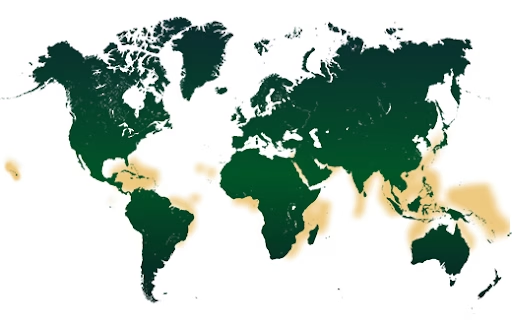
Growth Conditions of Coral Reefs

  • Warm water temperature: Reef-building corals require warm water conditions to survive. Different corals living in different regions can withstand various temperature fluctuations.  
    • Though it varies largely on geography and the species of coral, many reef-building corals have a narrow temperature range in which they can thrive. Most hard corals prefer water temperatures that range between 23° and 29° Celsius, though some can tolerate temperatures as low as 20° C and as high as 32° C.  
  • Saline condition: Corals can survive only under saline conditions with an average salinity between 27% to 40% 
  • Shallow water: Corals can be found throughout the world’s oceans, in both shallow and deep water. However, the reef-building corals that rely on a symbiotic relationship with algae need shallow water
    • The ideal depths for coral growth are 45 m to 55 m below sea surface, where there is abundant sunlight available. 
  • Clear water: Most reef-building corals depend upon zooxanthellae (tiny little algae that grow inside of them) to photosynthesize and provide food. If the water becomes cloudy or murky, or if corals are covered in sediment, the sunlight can’t get to the zooxanthellae and the corals lose that important food source.

Distribution

  • Coral reefs can be found in tropical destinations around the world, mostly in areas around the equator where the water is warmer. 
  • More than 100 countries have a coral reef within their borders, and over half of the world’s coral reefs are found within six countries: Australia, Indonesia, Philippines, Papua New Guinea, Fiji, and the Maldives. 
  • The major reef formations in India are restricted to the Gulf of Mannar, Palk bay, Gulf of Kutch, Andaman and Nicobar Islands and the Lakshadweep islands

Significance of Corals

  • Ecological Significance
    • Marine biodiversity hotspots — Coral reefs support fish, molluscs, crustaceans, sea turtles, sponges, algae, sea cucumbers and many microorganisms.
    • Habitat and breeding grounds — Reefs provide shelter, feeding sites and nursery grounds for a large number of marine species.
    • Support food chains — Coral reefs form the base of complex marine food webs and sustain fisheries.
    • Genetic diversity — Coral reef ecosystems contain valuable genetic resources useful for ecological research, biotechnology and medicine.
    • Indicator of ocean health — Since corals are sensitive to temperature, pollution and acidity, their condition reflects the health of marine ecosystems.
  • Coastal Protection
    • Natural breakwaters — Coral reefs reduce wave energy before waves reach the shore.
    • Protection from coastal erosion — Reefs help stabilise coastlines by reducing the force of waves and currents.
    • Buffer against storms — Healthy reefs reduce the impact of storm surges and high waves on coastal settlements.
    • Protection of islands — Low-lying islands such as Lakshadweep depend heavily on coral reefs for natural coastal defence.
  • Economic Significance
    • Support fisheries — Coral reefs sustain fish populations and provide livelihood support to coastal and island communities.
    • Tourism potential — Snorkelling, scuba diving, glass-bottom boating and marine eco-tourism depend on healthy coral reefs.
    • Livelihood security — Fishing, tourism, boat services, handicrafts and local trade are linked with coral reef ecosystems.
    • Reduced coastal protection cost — Coral reefs provide natural protection that reduces the need for artificial sea walls and breakwaters.
  • Climate and Environmental Significance
    • Coral skeletons (calcium carbonate) store carbon — reefs are geological-scale carbon sinks over millennia
    • Carbonate production — Corals contribute to reef-building and formation of islands, beaches and lagoons.
    • Climate adaptation — Healthy reefs improve the resilience of coastal and island communities against storms and sea-level rise.
  • Scientific and Medicinal Significance
    • Climate archives — coral skeletons record past ocean temperatures, salinity, rainfall — “natural thermometers” going back centuries
    • Pharmaceutical potential — Reef organisms produce bioactive compounds that may be useful in medicines.
      • Drug discovery frontier — reef organisms among most chemically diverse on Earth

Causes of Coral Degradation

  • Climate Change-related Causes
    • Ocean warming — Rising sea temperature causes coral bleaching, where corals expel the symbiotic algae living in their tissues.
      • Coral bleaching — Bleached corals lose their colour and major source of food. If stressful conditions continue, they may die.
      • Coral bleaching — rising ocean temperatures trigger mass bleaching events;  
    • Ocean acidification — Increased carbon dioxide absorption by oceans reduces carbonate availability, making it difficult for corals to build skeletons.
    • Sea-level rise — Rapid sea-level rise can reduce sunlight availability for corals, especially if coral growth cannot keep pace.
      • Deeper water, reduced light penetration; reduced photosynthesis by zooxanthellae 
    • Extreme weather events — Cyclones, marine heatwaves and storm surges physically damage coral reefs.
  • Pollution-related Causes
    • Sewage discharge — Untreated sewage increases nutrient load, causing algal growth and oxygen depletion.
    • Industrial pollution — Chemicals, heavy metals and toxic waste affect coral growth and marine life.
    • Plastic pollution — Plastics smother corals, injure marine animals and carry harmful pathogens.
    • Agricultural run-off — Fertilisers and pesticides entering the sea promote algal blooms and reduce water quality.
    • Oil spills — Oil blocks sunlight, coats coral surfaces and damages reef organisms.
  • Sedimentation and Coastal Development
    • Sedimentation — construction, deforestation, sand mining increase river sediment load; turbid water blocks sunlight; corals need clear, shallow water
    • Dredging — Dredging for ports, harbours and navigation increases turbidity and physically damages reefs.
    • Land reclamation — Coastal construction and reclamation destroy shallow marine habitats.
    • Construction activities — Roads, resorts, ports and coastal infrastructure increase sediment flow into reef areas.
    • Mining and quarrying near coasts — Sediment-laden run-off reduces sunlight penetration needed by corals.
    • Destruction of mangroves and seagrass beds — These ecosystems trap sediments and pollutants; their loss increases stress on reefs.
  • Direct human pressures 
    • Overfishing — Removal of key herbivorous fish allows algae to overgrow corals.
    • Destructive fishing — Blast fishing, poison fishing, bottom trawling and use of fine nets damage reef structures.
    • Ghost nets — Abandoned fishing nets entangle corals, turtles, fish and other marine organisms.
    • Coral mining — coral harvested for construction material, lime production, aquarium trade; Gulf of Kutch and Gulf of Mannar historically devastated
    • Collection of reef organisms — Excessive collection of shells, ornamental fish, corals and live rocks disturbs reef ecology.
    • Tourism-related Causes
      • Unregulated diving and snorkelling — Touching, trampling or breaking corals damages fragile reef structures.
      • Anchoring of boats — Boat anchors can break coral colonies.
      • Resort development — Tourism infrastructure may increase sewage, waste and physical disturbance.
      • Souvenir trade — Collection and sale of coral pieces and shells damages reef ecosystems.
  • Biological Causes
    • Invasive species — Alien species can compete with native reef organisms and alter reef balance.
      • Crown-of-thorns starfish (COTS) — outbreaks devastate reefs; natural predator (triton snail) removed by collection
    • Coral diseases — Warmer and polluted waters increase the spread of coral diseases.
    • Algal overgrowth — Excess nutrients and loss of grazing fish allow algae to dominate coral reefs.
      • Invasive algae — Kappaphycus (seaweed) introduced for aquaculture; smothers Palk Bay and Gulf of Mannar reefs
    • Predator outbreaks — Outbreaks of coral-eating organisms, such as crown-of-thorns starfish in some regions, can damage reefs.
  • Governance-related Causes
    • Weak enforcement of marine protection laws — Illegal fishing, tourism violations and pollution continue in many reef areas.
    • Fragmented coastal governance — Fisheries, tourism, ports, pollution control and forest departments often work separately.
    • Poor monitoring — Many reefs are remote and difficult to monitor regularly.
    • Development bias — Coastal infrastructure is often prioritised over reef conservation.

Impacts of Coral Degradation

  • Ecological Impacts
    • Loss of marine biodiversity — Coral reefs support a large variety of fish, molluscs, crustaceans, turtles, sponges and microorganisms. Their degradation leads to loss of habitat and decline in species diversity.
    • Decline in fish breeding grounds — Coral reefs act as nursery and breeding grounds for many marine species. Their damage reduces fish recruitment and affects marine food chains.
    • Disruption of food webs — When corals die, reef-dependent species decline and algal growth increases, disturbing the balance of the marine ecosystem.
    • Increase in algal dominance — Loss of corals creates space for algae to grow. This reduces reef recovery and changes the structure of the ecosystem.
    • Loss of genetic resources — Coral ecosystems contain unique marine organisms with potential value for medicine, biotechnology and ecological research.
  • Economic Impacts
    • Decline in fisheries — Damage to coral reefs reduces fish availability, directly affecting the income of fishing communities.
    • Loss of tourism revenue — Coral reefs attract tourists for scuba diving, snorkelling, glass-bottom boating and marine tourism. Degraded reefs reduce tourism potential.
    • Bioprospecting value lost — reef organisms source of anti-cancer (Ara-C), HIV (AZT), anti-malarial compounds; undiscovered drugs in yet-to-be-studied species lost permanently
  • Coastal Protection Impacts
    • Increased coastal erosion — Coral reefs reduce wave energy. Their degradation allows stronger waves to reach the coast, increasing erosion.
    • Greater storm surge impact — Degraded reefs provide less protection against cyclones, storm surges and high waves.
    • Threat to island stability — Low-lying islands, especially coral islands like Lakshadweep, depend on reefs for natural protection and sediment supply.
    • Higher disaster vulnerability — Coastal settlements become more exposed to cyclones, sea-level rise and extreme weather events.
  • Livelihood and Social Impacts
    • Livelihood insecurity — Fishers, tourism workers, boat operators, guides and coastal communities lose income when reefs degrade.
    • Food insecurity — Many coastal and island communities depend on reef fish and marine resources for nutrition.
    • Migration pressure — Loss of fisheries, tourism income and coastal safety may force people to migrate from vulnerable island and coastal areas.
    • Impact on traditional knowledge — Reef-dependent communities may lose traditional fishing practices, ecological knowledge and cultural links with the sea.
  • Climate and Environmental Impacts
    • Live coral reefs — carbon sinks; calcium carbonate skeletons store carbon over geological timescales
    • Dead/degraded reefs — carbon sources; decomposing organic matter releases CO₂ and methane; worsens climate crisis
    • Positive feedback loop — reef degradation releases carbon → warms ocean further → more bleaching → more degradation
    • Ocean chemistry — degraded reefs contribute to further ocean acidification through decomposition; self-reinforcing spiral
  • Scientific and Medicinal Loss
    • Loss of research value — Corals help scientists study climate change, ocean temperature, marine ecology and past environmental conditions.
    • Loss of medicinal potential — Many reef organisms produce bioactive compounds that may be useful in developing medicines.
      • Reef organisms — most chemically diverse on Earth; rich source of bioactive compounds
      • Future drugs — estimated 50,000+ undiscovered bioactive compounds in reef organisms; anti-cancer, anti-viral, antibiotic potential
    • Loss of ecological indicators — Since corals are sensitive to ocean health, their decline reduces an important natural indicator of marine environmental stress.

Challenges in Coral Conservation

  • Climate Change is a Global Driver
    • Local protection alone cannot fully prevent coral bleaching if ocean temperatures continue to rise.
    • No amount of local conservation saves reefs if global temperatures exceed 1.5°C — climate action is a prerequisite, not an adjunct
    • Ocean acidification — chemical process cannot be reversed locally; only global emission reduction helps
  • Slow Recovery
    • Corals grow slowly, and damaged reefs may take decades to recover.
    • Bleaching frequency outpacing recovery — reefs need 10–15 years between bleaching events; now getting 5–6 years maximum
  • High Sensitivity
    • Corals are sensitive to slight changes in temperature, salinity, turbidity, acidity and water quality.
  • Enforcement gaps:
    • Many reef areas are located around islands and remote coastal regions, making monitoring and enforcement difficult.
      • Vast marine areas — Coast Guard and fisheries departments cannot patrol Andaman, Lakshadweep, Gulf of Mannar adequately
    • Blast fishing continues — explosive availability and weak policing in remote island areas
    • Kappaphycus seaweed — introduced legally for aquaculture; now invasive on reefs; eradication extremely difficult
    • Andaman tourism — carrying capacity violations routine; tourist operators resist caps
  • Poor Waste Management
    • Coastal towns, ports and tourist areas often lack adequate sewage and solid waste treatment.
  • Lack of Public Awareness
    • Many people see corals as stones or decorative material, not as living ecosystems.
  • Fragmented Institutional Response
    • Coral conservation requires coordination among the environment, fisheries, tourism, shipping, ports, defence and local administration.
  • Limited Restoration Success
    • Coral transplantation and artificial reefs can help, but they cannot replace natural reefs if pollution, warming and sedimentation continue.
      • Restored corals vulnerable to same stressors that killed originals — without addressing root causes, restoration is futile
    • Coral gardening — slow; cannot keep pace with bleaching-scale losses; cannot restore reef structure, only coral cover
    • Restoration cost — economically prohibitive at scale
  • Data & monitoring gaps
    • No comprehensive real-time reef health monitoring system in India — bleaching detected reactively
    • Andaman reefs most biodiverse but least studied — remote access challenges
    • Baseline data poor — cannot measure change accurately without robust historical records
  • Community conflicts:
    • Fishing communities dependent on reefs resist protection zones — livelihood vs conservation tension
      • Fishing and tourism communities depend on reefs, so conservation cannot be based only on restrictions.
    • Tourism industry resists carrying capacity limits — economic pressure vs ecological need
    • Traditional vs commercial fishing — island communities’ customary rights vs industrial trawlers

Way Forward

  • Reduce Local Stressors
    • Even though climate change is a global problem, local stressors such as pollution, sedimentation, overfishing and unregulated tourism must be controlled.
  • Climate action — the only long-term solution
    • India’s NDC must include reef protection as a climate adaptation priority — link emissions targets explicitly to coral survival
    • Push for 1.5°C target globally — at 2°C, 99% of corals functionally extinct
      • A new study has found that at 1.5°C of warming, 99% of the world’s reefs will experience heatwaves that are too frequent for them to recover.
    • Carbon credit schemes for reef conservation — finance local protection through global carbon markets
  • Strengthen local protection:
    • Strengthen Marine Protected Areas
      • MPAs should not remain only on paper. They need proper zoning, enforcement, community involvement and livelihood alternatives.
      • Expand Marine Protected Areas — cover all four major reef systems with no-take zones and buffer zones
    • Responsible Marine Tourism
      • Diving, snorkelling, boating and island tourism should follow strict reef-friendly guidelines. Anchoring near reefs should be prohibited and mooring buoys should be installed.
      • Mandatory carrying capacity limits for reef tourism — Andaman, Lakshadweep; enforce with permits
    • Sustainable Fisheries Management
      • Overfishing, destructive nets, bottom trawling and collection of reef organisms should be regulated. Community-based fisheries management should be promoted.
      • Ban blast fishing permanently + Coast Guard enforcement — GPS-tracked patrol boats in reef zones
    • Regulate Coastal Development
      • Ports, resorts, dredging, reclamation and coastal infrastructure projects should be strictly assessed for reef impacts.
    • Improve Water Quality
      • Sewage treatment, industrial effluent control, plastic waste management and reduction of agricultural run-off are essential.
  • Protect Existing Healthy Reefs
    • Conservation should first focus on protecting healthy and resilient coral reefs from disturbance.
  • Coral Restoration
    • Coral nurseries, transplantation and artificial reef structures can be used in degraded sites, but only after removing the causes of degradation.
  • Climate-resilient Reef Management
    • Reef areas that show natural resilience to heat stress should be identified and given special protection.
  • Community Participation
    • Fishers, island communities, tourism operators and local panchayats should be made partners in reef conservation.
  • Use Technology
    • Satellite monitoring, underwater drones, GIS mapping, temperature sensors and reef health dashboards can improve monitoring.
  • Awareness and Education
    • Coastal communities, tourists, divers and students should be informed that corals are living organisms and should not be touched, collected or damaged.

Coral Bleaching

When corals are stressed by changes in conditions such as temperature, light, or nutrients, they expel the symbiotic algae living in their tissues, causing them to turn completely white.

When a coral bleaches, it is not dead. Corals can survive a bleaching event, but they are under more stress and are subject to mortality. 

Causes of Coral Bleaching
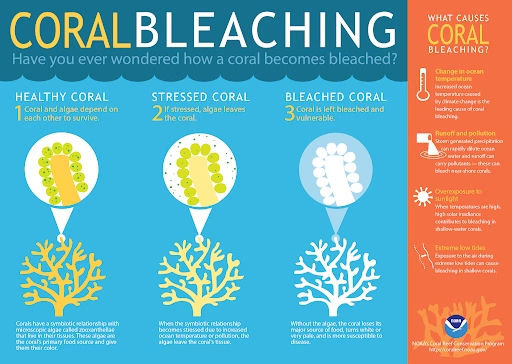
  • Change in ocean temperature
    • Increased ocean temperature caused by climate change is the leading cause of coral bleaching.
  • Runoff and pollution
    • Storm generated precipitation can rapidly dilute ocean water and runoff can carry pollutants — these can bleach near-shore corals. 
  • Overexposure to sunlight
    • When temperatures are high, high solar irradiance contributes to bleaching in shallow-water corals.
  • Extreme low tides
  • Exposure to air during extreme low tides can cause bleaching in shallow corals.

Conclusion

Coral reefs are among the most beautiful, productive and vulnerable marine ecosystems. They support biodiversity, fisheries, tourism, coastal protection and climate resilience. However, ocean warming, bleaching, pollution, destructive fishing and unplanned coastal development are pushing them towards degradation. Coral conservation must combine global climate action, local pollution control, sustainable fisheries, responsible tourism, scientific restoration and community participation. The guiding principle should be: “Protect corals to protect coasts, oceans and coastal communities.”

Sample Mains Question

Q1. Coral reefs are called the rainforests of the sea. Explain their ecological and economic significance.
(150 words, 10 marks)

Q2. What is coral bleaching? Discuss its major causes and impacts on marine ecosystems.
(150 words, 10 marks)

✍️ Curated by InclusiveIAS Editorial Team

At InclusiveIAS, our editorial team is led by experts who have successfully cleared multiple stages of the UPSC Civil Services Examination, including Mains and Interview. With deep insights into the demands of the exam, we focus on crafting content that is accurate, exam-relevant, and easy to grasp.

Whether it’s Polity, Current Affairs, GS papers, or Optional subjects, our notes are designed to:

  • Break down complex topics into simple, structured points

  • Align strictly with the UPSC syllabus and PYQ trends

  • Save your time by offering crisp yet comprehensive coverage

  • Help you score more with smart presentation, keywords, and examples

🟢 Every article, note, and test is not just written—but carefully edited to ensure it helps you study faster, revise better, and write answers like a topper.