


Table of Contents
ToggleAn earthquake is a sudden shaking of the Earth’s surface caused by the release of energy from the Earth’s crust, usually along faults or plate boundaries. It is one of the most destructive natural hazards because it occurs suddenly, gives very little warning, and can cause large-scale loss of life, destruction of infrastructure and secondary disasters such as landslides, fires and tsunamis.
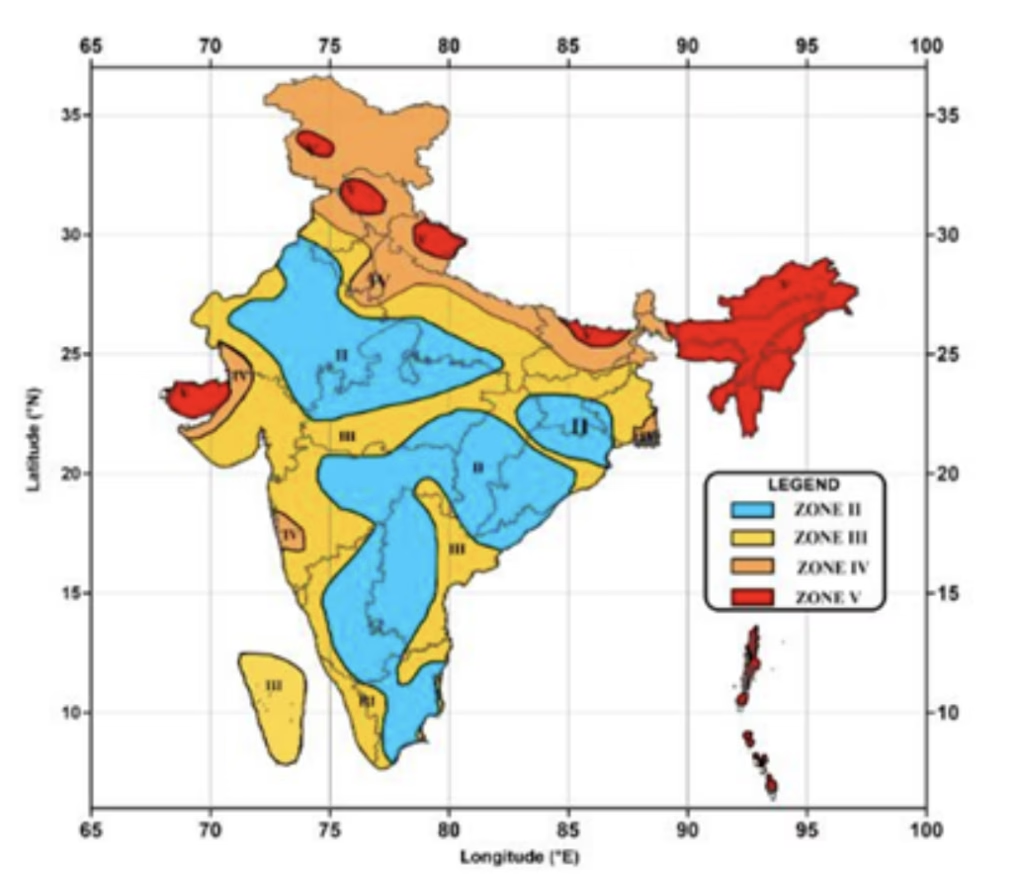
India is highly vulnerable to earthquakes because a large part of the country lies in seismically active zones, especially the Himalayan belt, North-East India, Kachchh region, Andaman and Nicobar Islands and parts of peninsular India.
Structural Measures
Non-Structural Measures
To enhance earthquake safety, the government has launched several initiatives:
Earthquakes cannot be prevented, but their impact can be greatly reduced through preparedness, safe construction, public awareness and effective response mechanisms. For India, earthquake disaster management must shift from a relief-centric approach to a risk-reduction approach, with strong focus on earthquake-resistant infrastructure, community preparedness and strict enforcement of building safety norms.
Q1. What is an earthquake? Explain the major natural and anthropogenic causes of earthquakes.(150 words, 10 marks)
Q2. Discuss the earthquake vulnerability profile of India.(150 words, 10 marks)
Q3. Earthquakes cannot be prevented, but their impact can be reduced. Discuss.(250 words, 15 marks)
Q4. Explain the structural and non-structural measures for earthquake risk reduction.(250 words, 15 marks)
Q5. Poor enforcement of building codes is a major reason for earthquake vulnerability in India. Analyse.(150 words, 10 marks)
At InclusiveIAS, our editorial team is led by experts who have successfully cleared multiple stages of the UPSC Civil Services Examination, including Mains and Interview. With deep insights into the demands of the exam, we focus on crafting content that is accurate, exam-relevant, and easy to grasp.
Whether it’s Polity, Current Affairs, GS papers, or Optional subjects, our notes are designed to:
Break down complex topics into simple, structured points
Align strictly with the UPSC syllabus and PYQ trends
Save your time by offering crisp yet comprehensive coverage
Help you score more with smart presentation, keywords, and examples
🟢 Every article, note, and test is not just written—but carefully edited to ensure it helps you study faster, revise better, and write answers like a topper.

Empowering UPSC aspirants with structured preparation, exam-focused notes, free tests, and expert guidance — trusted by thousands of serious aspirants.
