UPDATES

Phosphorus Cycle – Steps, Features, and Human Impact | UPSC Environment Notes

  • Home
  • Phosphorus Cycle – Steps, Features, and Human Impact | UPSC Environment Notes
Shape Image One

Phosphorus Cycle

  • Phosphorus is an essential element for all living organisms. It is a key component of biological membranes (in the form of phospholipids), nucleic acids (DNA and RNA), and molecules involved in cellular energy transfer such as ATP (adenosine triphosphate). In animals, phosphorus plays a critical structural role, being required in significant amounts for the formation of bones, teeth, and shells, which are primarily composed of calcium phosphate compounds.
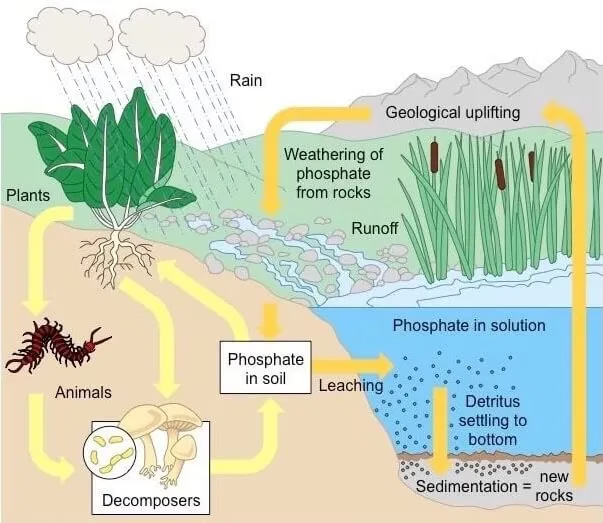
  • Phosphorus Cycle is largely a sedimentary cycle, making it much slower.
  • The natural reservoir of phosphorus is phosphate-rich rocks. When these rocks undergo weathering, phosphates are released into the soil. Plants absorb these phosphates through their roots, and the element then travels through the food chain as herbivores and carnivores consume plants and other animals.
  • Decomposers, particularly phosphate-solubilising bacteria, help return phosphorus to the soil by breaking down organic waste and dead organisms.
  • Unlike the carbon cycle:
    • There is norespiratory release of phosphorus into atmosphere.
    • Atmospheric inputs of phosphorus through rainfall are much smaller than carbon inputs.
    • Gaseous exchanges of phosphorus between organism and environment are negligible.

Key Differences from the Carbon Cycle

  • Unlike the carbon cycle, the phosphorus cycle exhibits distinct characteristics:
  • No Respiratory Release:
    • Phosphorus is not released into the atmosphere through respiration by organisms, unlike carbon dioxide in the carbon cycle.
  • Minimal Atmospheric Input:
    • The input of phosphorus via rainfall is significantly smaller compared to the atmospheric inputs of carbon.
  • Negligible Gaseous Exchange:
    • Gaseous exchanges of phosphorus between organism and environment are negligible

The phosphorus cycle plays a foundational role in sustaining life, supporting cellular energy transfer, genetic material, and structural integrity in organisms. Unlike the more dynamic carbon cycle, the phosphorus cycle is much slower and sediment-based, with no significant atmospheric component.

FAQs on Phosphorus Cycle

Q1. What is the phosphorus cycle?

It is the movement of phosphorus through rocks, soil, plants, animals, and decomposers without any atmospheric component.

✍️ Curated by InclusiveIAS Editorial Team

At InclusiveIAS, our editorial team is led by experts who have successfully cleared multiple stages of the UPSC Civil Services Examination, including Mains and Interview. With deep insights into the demands of the exam, we focus on crafting content that is accurate, exam-relevant, and easy to grasp.

Whether it’s Polity, Current Affairs, GS papers, or Optional subjects, our notes are designed to:

  • Break down complex topics into simple, structured points

  • Align strictly with the UPSC syllabus and PYQ trends

  • Save your time by offering crisp yet comprehensive coverage

  • Help you score more with smart presentation, keywords, and examples

🟢 Every article, note, and test is not just written—but carefully edited to ensure it helps you study faster, revise better, and write answers like a topper.