UPDATES

Importance of Food Processing

  • Home
  • Importance of Food Processing
Shape Image One

Importance of Food Processing

India’s food processing industry has undergone rapid transformation, driven by its vast agricultural base, rising domestic demand, and supportive government policies. India is poised to emerge as a global leader in the food processing sector, with an impressive growth trajectory. The agriculture sector forms the backbone of India’s food processing industry, India being the largest producer of fruits, vegetables, millets, tea, and food grains as well as milk and livestock globally.

Importance

  • Economic & Industrial Growth
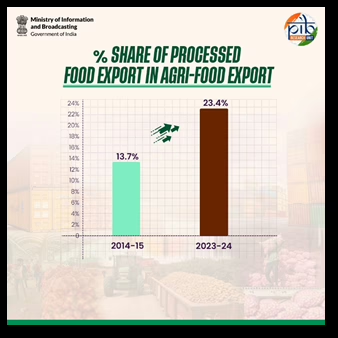
    • GDP & Exports: Contributes ~8-9% to manufacturing GDP and ~13% to India’s total exports, boosting foreign exchange earnings.
      • The food processing industry contributes around 32% of the overall Indian food market, 13% of total exports, and 6% of industrial investment.
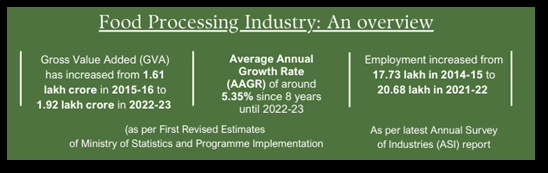
    • Employment: Generates large-scale employment (~12-15 million) across rural and urban areas, especially for semi-skilled and unskilled labor.
      • Engages approximately 1.93 million people in the registered sector and 5.1 million workers in the unregistered sector.
    • Value Addition: Transforms low-value agricultural produce into high-value products, increasing income for farmers and entrepreneurs.
    • Investment Magnet: 100% FDI under automatic route attracts global companies, driving technology transfer and infrastructure development.
  • Agricultural & Rural Development
    • Farmers’ Income: Provides an assured market, reduces price volatility, and enables better price realization through direct procurement.
    • Reduces Wastage: Cuts post-harvest losses (currently 15-25% for fruits/vegetables), saving ₹1-1.5 lakh crore annually.
    • Crop Diversification: Encourages shift from staple crops to high-value horticulture, dairy, poultry, and fisheries.
    • Rural Industrialization: Promotes agro-based industries in rural areas, reducing migration to cities.
  • Food & Nutritional Security
    • Year-round Availability: Preservation techniques (canning, freezing, drying) allow consumption of seasonal foods throughout the year.
    • Nutrition Enhancement: Fortification of staples (iron in rice, vitamins in milk) addresses micronutrient deficiencies (e.g., anemia).
    • Food Safety: Processing reduces microbial contamination and extends shelf life, ensuring safer food supply.
    • Urban Convenience: Meets the growing demand for ready-to-eat and ready-to-cook foods in urban centers.
  • Strategic & Global Advantages
    • Global Food Hub: Leverages India’s diverse agro-climatic zones to become a global supplier of processed foods.
    • Reduces Import Dependence: Domestic processing of pulses, edible oils, and fruits reduces reliance on imports.
    • Strengthens Supply Chains: Integrated cold chains and warehousing build resilience against supply shocks (like pandemics).
    • Brand India: Promotes Indian cuisines and specialties (e.g., mango pulp, basmati rice, spices) in international markets.
    • Price stability: Processing absorbs surplus during glut seasons, reducing price crashes
      • Stabilises supply during lean seasons
  • Social & Infrastructural Impact
    • Women Empowerment: Employs a significant percentage of women in sorting, packaging, and small-scale processing units.
    • Infrastructure Development: Spurs growth of cold storage, warehousing, logistics, and packaging industries.
    • Balanced Regional Development: Promotes processing clusters in underdeveloped regions (e.g., North-East, tribal areas).

Sample Mains Question

Q. Food processing industry holds the key to doubling farmers’ income, reducing post-harvest losses, and ensuring nutritional security. Discuss the significance of the food processing sector in India and suggest measures to strengthen it.

✍️ Curated by InclusiveIAS Editorial Team

At InclusiveIAS, our editorial team is led by experts who have successfully cleared multiple stages of the UPSC Civil Services Examination, including Mains and Interview. With deep insights into the demands of the exam, we focus on crafting content that is accurate, exam-relevant, and easy to grasp.

Whether it’s Polity, Current Affairs, GS papers, or Optional subjects, our notes are designed to:

  • Break down complex topics into simple, structured points

  • Align strictly with the UPSC syllabus and PYQ trends

  • Save your time by offering crisp yet comprehensive coverage

  • Help you score more with smart presentation, keywords, and examples

🟢 Every article, note, and test is not just written—but carefully edited to ensure it helps you study faster, revise better, and write answers like a topper.