Micro, Small, and Medium Enterprises (MSME)
The Micro, Small, and Medium Enterprises (MSME) sector is universally acknowledged as the bedrock of the Indian economy and a powerful catalyst for its socio-economic development. Often hailed as the “engine of growth” and the “nursery of entrepreneurship,” this vibrant sector is critical to India’s ambitions of becoming a $5 trillion economy and achieving inclusive and sustainable development.
MSMEs are not merely small-scale businesses; they represent a decentralized, widely dispersed, and highly adaptive network of enterprises that form the very fabric of the nation’s industrial ecosystem. Their significance stems from their immense contribution to critical macroeconomic parameters: they contribute approximately 30% to the GDP, account for nearly half of the country’s total exports, and, most importantly, with 5.93 crore registered MSMEs it employs more than 25 crore people.
Classification
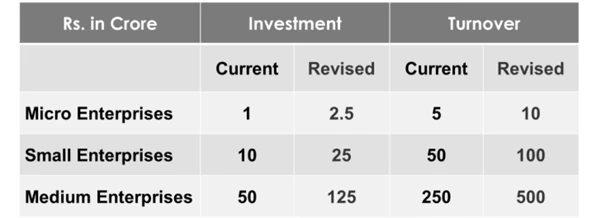
- The classification was revised in 2020 to provide a uniform criteria based on investment and annual turnover, eliminating the distinction between manufacturing and service sectors.
- Recently in Union Budget 2025-26, to help MSMEs scale operations and access better resources, the investment and turnover limits for classification have been increased by 2.5 times and 2 times, respectively. This is expected to improve efficiency, technological adoption, and employment generation.
Significance of the MSME Sector
- Employment Generation: MSMEs are significant employers in India, providing jobs to a large portion of the population, especially in rural and semi-urban areas. They are labor-intensive and offer employment opportunities at a lower capital cost compared to large industries, thus helping in addressing the unemployment issue.
- They employ more than 25 crore people
- Contribution to GDP: The MSME sector contributes substantially to India’s Gross Domestic Product (GDP). It accounts for a significant portion of the industrial output and economic activity in the country, driving overall economic growth.
- Contributes around ~30% to India’s GDP.
- In recent years, the sector has displayed remarkable resilience, with its share in the country’s Gross Value Added (GVA) increasing from 27.3% in 2020-21 to 29.6% in 2021-22 and 30.1% in 2022-23, highlighting its growing role in national economic output.
- Export Contribution: MSMEs play a crucial role in boosting India’s export performance. They contribute a significant share to the country’s total exports, particularly in sectors such as textiles, handicrafts, and engineering goods, helping India earn valuable foreign exchange.
- In 2023-24, MSME-related products accounted for 45.73% of India’s total exports
- Exports from MSMEs have seen substantial growth, rising from ₹3.95 lakh crore in 2020-21 to ₹12.39 lakh crore in 2024-25.
- The number of exporting MSMEs has also surged, increasing from 52,849 in 2020-21 to 1,73,350 in 2024-25.
- Their contribution to India’s total exports has steadily grown, reaching 43.59% in 2022-23, 45.73% in 2023-24, and 45.79% in 2024-25
- Balanced Regional Development: MSMEs help in promoting balanced regional development by setting up industries in backward and rural areas, thereby reducing regional disparities. This leads to inclusive growth and development across the country.
- Innovation and Flexibility: MSMEs are often more innovative and adaptable than larger enterprises. They can quickly respond to changes in market demand and consumer preferences, fostering innovation and entrepreneurship. Their flexibility allows them to explore new markets and products efficiently.
- Support for Large Industries: MSMEs act as ancillary units to large industries, providing them with various inputs such as raw materials, components, and services. This interdependence strengthens the overall industrial ecosystem and enhances productivity and competitiveness.
- Diverse Industrial Base: The MSME sector encompasses a wide range of industries, from traditional crafts to modern manufacturing, thus diversifying the industrial base of the economy. This diversity helps in reducing economic vulnerabilities and promoting sustainable growth.
- Inclusive Growth: MSMEs play a vital role in promoting inclusive growth by empowering marginalized sections of society, including women, Scheduled Castes, Scheduled Tribes, and other disadvantaged groups, through employment and entrepreneurial opportunities.
Key Challenges Faced by MSMEs
Despite their monumental contribution to the Indian economy, MSMEs operate in an environment fraught with numerous structural and operational challenges. These constraints often stifle their growth, competitiveness, and sustainability, creating a persistent “existential crisis” for the sector.
Challenges
- Financial Constraints
- Access to Formal Credit: A vast majority of MSMEs, especially micro-enterprises, lack access to timely and adequate formal credit.
- Collateral Requirement: Banks often demand collateral, which most small entrepreneurs cannot provide.
- High Cost of Credit: Interest rates on loans for MSMEs are typically higher than those for large corporations, increasing their cost of capital.
- Lack of Credit History: Many MSMEs operate informally, lacking a documented financial track record, making risk assessment difficult for lenders.
- Delayed Payments: The menace of delayed payments, particularly from large corporates and government departments, is a severe working capital bottleneck.
- This forces MSMEs to rely on expensive informal sources of credit, pushing them into a debt trap.
- The MSME Samadhaan portal was instituted to address this, but enforcement remains a challenge.
- Inadequate Working Capital: Irregular cash flow and limited capital make it difficult to manage day-to-day operations, purchase raw materials, and invest in growth.
- Technological and Infrastructural Bottlenecks
- Outdated Technology: Many MSMEs use obsolete machinery and production processes, leading to:
- Low productivity and poor quality of products.
- High cost of production and inability to meet international standards.
- Inefficient use of resources and energy.
- Inadequate Physical Infrastructure: Poor access to reliable power, water, roads, and logistics networks in industrial clusters increases operational costs and reduces competitiveness.
- Low R&D and Innovation: Limited financial capacity and technical expertise prevent MSMEs from investing in research, development, and innovation, keeping them trapped in low-value-added activities.
- Marketing and Market Access Challenges
- Limited Marketing Skills and Resources: MSMEs struggle with branding, advertising, and developing effective marketing strategies to reach a wider customer base.
- Difficulty in Market Linkages: Integrating into domestic and global supply chains is challenging due to a lack of connections, information, and compliance with the stringent requirements of large buyers.
- Global Competition: They face intense competition from cheap imports, often from countries like China and Vietnam, which benefit from economies of scale and government support.
- Regulatory and Compliance Burden
- Regulatory Overlap: Despite government efforts, MSMEs must navigate a complex web of regulations from central, state, and local bodies related to GST, labour laws, environmental norms, and licensing.
- “Inspector Raj”: The fear of frequent inspections and associated harassment and corruption adds to the mental and financial burden.
- GST Complexity: While GST aimed to simplify taxes, its compliance structure (multiple slabs, frequent filing) can be particularly onerous for small firms with limited administrative capacity.
- Human Resource and Skill Gaps
- Shortage of Skilled Manpower: There is a significant mismatch between the skills required by the industry and those available in the labour force.
- Inability to Attract Talent: MSMEs often cannot offer competitive salaries and benefits compared to large corporations, making it difficult to attract and retain qualified managers and technicians.
- Limited Training Infrastructure: Most MSMEs lack the resources to invest in formal training and skill upgradation for their employees.
- Other Strategic Challenges
- Limited Adoption of E-commerce and Digital Tools: Many MSMEs have been slow to adopt digital technologies for sales, payments, and supply chain management, limiting their market reach.
- Vulnerability to Economic Shocks: As witnessed during the COVID-19 pandemic, MSMEs are highly vulnerable to economic disruptions due to their thin financial buffers and dependence on a limited number of buyers or suppliers.
Some Government Steps
The Government of India has implemented a robust array of initiatives aimed at bolstering the Micro, Small, and Medium Enterprises (MSME) sector, recognizing its pivotal role in the economy. These efforts range from financial support and procurement policies to capacity building and market integration. Key initiatives include the Udyam Registration Portal, PM Vishwakarma scheme, PMEGP, SFURTI, and the Public Procurement Policy for MSEs, all aimed at fostering entrepreneurship, enhancing employment, and integrating informal sectors into the formal economy. These initiatives reflect the government’s commitment to supporting MSMEs and driving inclusive economic growth nationwide.
- PM Vishwakarma
- The ‘PM Vishwakarma’ scheme, launched by the Government of India, aims to enhance the quality and reach of products and services by artisans and craftspeople, integrating them into domestic and global value chains. Announced in the 2023-24 Budget and launched on September 17, 2023, this scheme seeks to provide comprehensive support to Vishwakarmas, improving their socio-economic status and quality of life.
- Udyam Registration Portal
- Launched on July 1, 2020, the Udyam Registration Portal serves as a pivotal platform for facilitating the registration of enterprises across India. The portal encourages enterprises previously registered under the Udyog Aadhaar Memorandum and Entrepreneurship Memorandum-II to migrate to this new system. It offers a free, paperless, and self-declaration-based registration process, eliminating the need for document uploads, thus simplifying the formalization of businesses.
- Prime Minister’s Employment Generation Programme (PMEGP)
- Prime Minister’s Employment Generation Programme (PMEGP) is a credit linked subsidy scheme for providing employment opportunities through establishment of micro-enterprises in the non-farm sector. Under the Scheme, Margin Money (Subsidy) is provided to beneficiaries availing loan from banks for setting up new enterprises. The maximum project cost admissible for setting up of new project is Rs. 50 lakhs in manufacturing sector and Rs. 20 lakhs in Service Sector
- Scheme of Fund for Regeneration of Traditional Industries (SFURTI)
- Launched in 2005-06, the Scheme of Fund for Regeneration of Traditional Industries (SFURTI) aims to organize traditional artisans into collectives or clusters, facilitating product development, diversification, and value addition. The scheme promotes traditional sectors and seeks to sustainably increase the income of artisans. SFURTI was revamped in 2014-15 to further enhance its impact and reach.
- The primary objective of SFURTI is to organize artisans and traditional industries into clusters to improve competitiveness, create employment opportunities, and enhance the marketability of their products. By bringing artisans together, the scheme helps them leverage collective resources and skills, leading to better income prospects and sustained growth.
- Public Procurement Policy for Micro and Small Enterprises
- The Ministry of MSME, Government of India, notified the Public Procurement Policy for Micro and Small Enterprises (MSEs) in 2012. This policy mandates that 25% of annual procurement by Central Ministries, Departments, and Central Public Sector Enterprises (CPSEs) must be sourced from MSEs. Within this 25%, 4% is reserved for MSEs owned by Scheduled Castes/Scheduled Tribes (SC/ST), and 3% is reserved for MSEs owned by women entrepreneurs. Additionally, 358 items are exclusively reserved for procurement from MSEs.
Way Forward
To transform the MSME sector from a “survival” mode to a “growth” mode and harness its full potential as the engine of the Indian economy, a multi-pronged, holistic strategy is essential. The way forward must focus on enhancing ease of doing business, fostering competitiveness, and facilitating integration into the global value chain.
The key strategic pillars are:
- Enhancing Financial Accessibility and Stability
- Strengthening Formal Credit Channels:
- Expand and Promote CGTMSE: Increase the coverage and awareness of the Credit Guarantee Fund Trust for Micro and Small Enterprises (CGTMSE) to encourage banks to lend without collateral.
- Promote Fintech and Digital Lending: Leverage fintech solutions for faster, data-driven credit scoring and disbursement of small-ticket loans to micro-enterprises.
- Addressing the Working Capital Crunch:
- Mainstream TReDS: Mandate and incentivize more large corporates and PSUs to onboard the Trade Receivables Discounting System (TReDS). This will institutionalize the resolution of delayed payments by allowing MSMEs to auction their trade receivables.
- Encourage Factoring Services: Promote a vibrant factoring ecosystem to provide immediate liquidity against invoices.
- Diversifying Funding Avenues:
- Boost Equity Financing: Actively channel the Self-Reliant India (SRI) Fund to provide growth capital to viable MSMEs, reducing their debt burden.
- SRI Fund aims to provide support for MSMEs across the country through equity infusion.
- Encourage Venture Debt: Create a supportive environment for alternative investment funds focused on MSMEs.
- Driving Technology Adoption and Innovation
- Technology Upgradation:
- Revamp and Market CLCS-TUS: Make the Credit Linked Capital Subsidy for Technology Upgradation (CLCS-TUS) scheme more attractive and accessible, with a focus on green technologies and Industry 4.0.
- Establish Technology Extension Services: Create a network of sector-specific technology centres that offer MSMEs access to advanced machinery, testing facilities, and technical consultancy on a rental or shared basis.
- Promoting Digital Transformation:
- Incentivize E-commerce Onboarding: Provide subsidies and training for MSMEs to list on domestic and international e-commerce platforms.
- Adopt Cloud and AI: Encourage the adoption of cloud-based ERP and accounting software to improve efficiency and compliance.
- Strengthening Market Linkages and Export Potential
- Aggregated Marketing: Promote the formation of Producer Organizations (POs) and clusters to achieve economies of scale in branding, marketing, and logistics.
- Integrate into Supply Chains:
- Strengthen the Public Procurement Policy by ensuring stricter enforcement of the 25% procurement target from MSEs and transparent monitoring of payment timelines.
- Facilitate partnerships between MSMEs and large corporations through vendor development programs.
- Boost Export Competitiveness:
- Export Catalysts: Provide handholding support for compliance with international standards (like ISO), packaging, and marketing for exports.
- Leverage FTAs: Educate and prepare MSMEs to benefit from India’s Free Trade Agreements by identifying niche product categories.
- Simplifying the Regulatory and Compliance Framework
- Single Window System: Implement a truly integrated single-window system for all business-related approvals and compliances at the central and state levels.
- Stable and Simple GST Regime: Work towards a simpler GST structure to reduce compliance costs. Extend the QRMP scheme to make filing easier for smaller units.(Recently, GST has been rationalised)
- Decriminalize Minor Violations: Continue the process of decriminalizing minor technical and procedural defaults under various business laws.
- Building a Future-Ready Skilled Workforce
- Align Skill India with MSME Needs: Forge stronger industry-academia linkages. The curriculum of ITIs and other skill development institutions should be co-designed with MSME clusters to ensure a supply of industry-ready talent.
- Upskilling and Reskilling: Launch targeted programs for upskilling existing MSME workers in areas like digital literacy, quality control, and advanced manufacturing techniques.
- Fostering a Supportive Ecosystem
- Focus on Cluster Development: Intensify schemes like SFURTI and Cluster Development Programme to create common facility centers (CFCs) for shared infrastructure, R&D, and waste management.
- Promote Sustainability: Incentivize MSMEs to adopt green and sustainable practices (energy efficiency, waste recycling) through green credit and certification, opening access to new “green” markets.
- Data-Driven Policy Making: Utilize the data from Udyam Registration and other portals for evidence-based policy formulation and monitoring.
The MSME sector stands at a critical juncture. By implementing a coordinated strategy focused on “Ease of Financing,” “Technology Infusion,” “Market Access,” and “Ease of Doing Business,” India can empower its MSMEs to graduate from being informal, subsistence-level units to becoming formal, competitive, and resilient growth engines. This transformation is not just an economic imperative but a fundamental prerequisite for achieving equitable and sustainable development.
Additional Information
Report of the Expert Committee on Micro, Small and Medium Enterprises (UK Sinha Committee report)
- Addressing the cumbersome registration process and promoting use of Unique Enterprise Identifier (UEI) like PAN for purposes like procurement, availing government sponsored benefits, etc.
- Establishing Enterprise Development Centers (EDCs) in each district for capacity building of entrepreneurs.
- MSME clusters should collaborate with companies having innovation infrastructure, R&D institutions and universities.
- Considering their vulnerability and size, insolvency code / delegated legislation should provide for out-of-court assistance such as mediation, debt counseling etc. to MSMEs.
- Creation of a Digital Public Infrastructure to reduce loan-operating costs significantly and also address information asymmetry that improves credit access.
- Creation of a National Council for MSMEs to facilitate coherent policy outlook and uniform monitoring.
- The MSMED Act, 2006 should be amended and its focus should be towards market facilitation and ease of doing business.
GS-3 Sample Questions
1. Examine the role of Micro, Small and Medium Enterprises (MSMEs) in achieving inclusive and sustainable economic growth in India.
2. Despite being the “engine of growth”, India’s MSME sector continues to face several structural challenges. Discuss the major constraints and suggest policy measures to overcome them.
3. “Empowering MSMEs is central to achieving the vision of a $5 trillion economy.” Critically analyse this statement with reference to recent Budget 2025-26 measures.
At InclusiveIAS, our editorial team is led by experts who have successfully cleared multiple stages of the UPSC Civil Services Examination, including Mains and Interview. With deep insights into the demands of the exam, we focus on crafting content that is accurate, exam-relevant, and easy to grasp.
Whether it’s Polity, Current Affairs, GS papers, or Optional subjects, our notes are designed to:
Break down complex topics into simple, structured points
Align strictly with the UPSC syllabus and PYQ trends
Save your time by offering crisp yet comprehensive coverage
Help you score more with smart presentation, keywords, and examples
🟢 Every article, note, and test is not just written—but carefully edited to ensure it helps you study faster, revise better, and write answers like a topper.